
Quick answer
After hail or high winds in Dallas–Fort Worth, document visible damage safely and arrange a professional inspection before making repair or insurance decisions.
A strong North Texas windstorm can damage a roof without leaving a dramatic hole or an obvious pile of shingles in the yard. Wind damage often starts at the roof’s most exposed edges, lifting shingles just enough to break their seal or loosen fasteners. The roof may still look acceptable from the street, yet its ability to shed the next hard rain may already be compromised.
That is why a post-storm roof check matters for homeowners and commercial property managers in Dallas, Plano, Fort Worth, and Flower Mound. Finding a small issue before water reaches the decking, insulation, ceilings, or electrical systems is usually far simpler than repairing the damage after a leak appears.
How wind damage affects a roofing system
Wind does not need to remove an entire roof to create a problem. As air moves over a building, it creates uplift pressure. Roof edges, ridges, hips, valleys, vents, chimneys, skylights, and areas near changes in roof height are especially vulnerable. A gust can lift a shingle tab, bend flashing, pull a nail loose, or stress a seal that had already weakened with age and Texas heat.
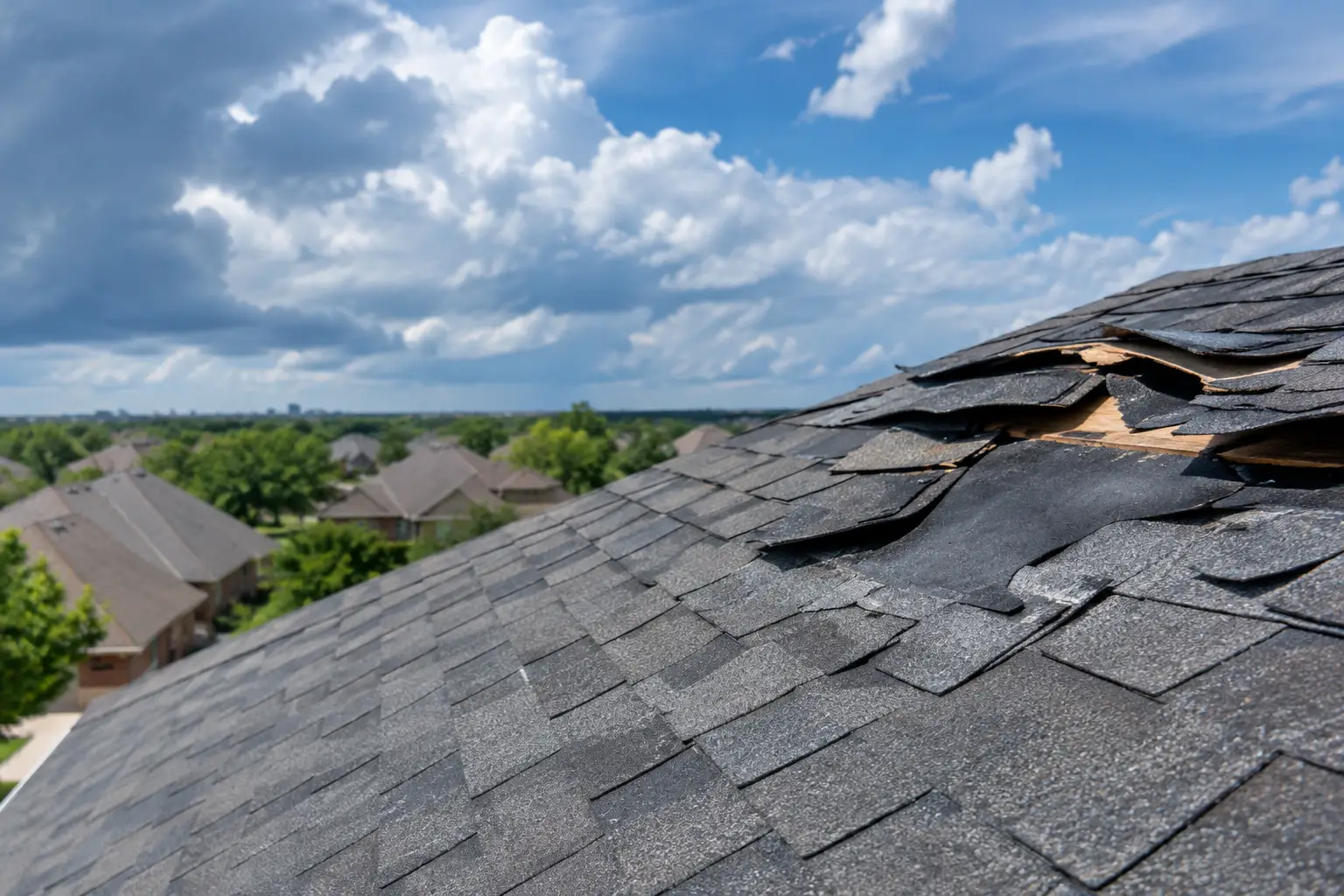
On an asphalt shingle roof, common damage includes lifted, creased, torn, missing, or displaced shingles. A crease matters because it can weaken the shingle’s structure even when the tab settles back into place. Granule loss may also follow, leaving the shingle less protected from sunlight and weathering.
Metal roofing can develop loose panels, lifted trim, damaged fasteners, or separation around penetrations. Tile roofs may have cracked or shifted tiles, though the underlayment below can be affected even when individual tiles appear intact. On commercial low-slope roofs, wind can lift membrane seams, pull edge metal loose, disturb flashing, or allow water beneath the roofing surface.
The roof is only part of the system. Wind can loosen gutters, bend downspouts, dislodge gutter guards, and pull fascia away from the roofline. If gutters no longer direct water away from the structure, rain can create a separate set of problems around siding, soffits, foundations, and landscaping.
Signs of wind damage you can spot safely
A ground-level walk around the property after the weather clears can reveal useful clues. Do not climb onto the roof or use a ladder unless you are trained and equipped to do so. Storm conditions can leave surfaces slick, loose, and unsafe.
Look for shingles or roofing material in the yard, along fence lines, or near downspouts. Check the roofline from several angles for uneven shingle courses, exposed underlayment, lifted ridge caps, sagging gutters, loose metal flashing, or debris caught in valleys. If you see a piece of flashing or shingle material, keep it if practical and take a clear photo of where it was found.
Inside, inspect ceilings, attic spaces, exterior walls, and window trim. Fresh water stains, bubbling paint, damp insulation, musty odors, or drips after rain deserve attention. A leak does not always appear directly below the roof opening. Water can travel along decking, rafters, wiring, or insulation before it becomes visible indoors.
For commercial buildings, maintenance teams should also look for interior ceiling stains, wet insulation, clogged drains, loose edge metal, and ponding water that remains long after rain has stopped. Flat and low-slope roofing systems can conceal storm-related issues, so a visual check from the ground is not a substitute for a qualified inspection.
When a wind-damaged roof needs immediate attention
Some conditions should move to the top of the list. Active leaking, missing shingles that expose the roof deck, loose roofing materials that could blow off, damaged flashing around a chimney or vent, and sagging or detached gutters all warrant prompt professional evaluation. If water is entering the building, protect belongings and move furniture away from the affected area when it is safe to do so.
A temporary covering may reduce additional water entry, but it is not a permanent repair. The right solution depends on the roof’s age, material, existing condition, and the extent of the affected area. A newer roof with a limited number of damaged shingles may be a good repair candidate. A roof with widespread lifting, brittle shingles, repeated leaks, or multiple prior repairs may be better served by replacement.
That distinction matters. Repairing a small, isolated issue can preserve a sound roof and control costs. Replacing only the visibly damaged area on a roof that is near the end of its service life can lead to mismatched materials and recurring trouble. A detailed inspection helps property owners make that decision based on evidence rather than guesswork.
Why a professional inspection is worth scheduling
Wind damage is easy to miss because roofing problems are often hidden beneath the surface. A trained roofer can assess the full system, including shingles or membrane condition, flashing, vents, ridge caps, valleys, roof penetrations, gutters, and drainage. They can also identify whether a suspected issue is storm-related, ordinary wear, installation-related, or caused by another source such as a plumbing or HVAC leak.
Documentation is another practical reason to schedule an inspection soon after a storm. Clear photos, written findings, and a scope of necessary work give you a factual record of the roof’s condition. If an insurance claim is appropriate, that information can help you communicate with your carrier and prepare for the adjuster inspection.
Insurance policies and coverage vary. An inspection does not guarantee claim approval, and property owners should not assume every repair will be covered. Still, timely documentation can prevent a damaged area from becoming harder to explain after weeks of additional weather exposure. Keep copies of inspection reports, photos, receipts for temporary protective measures, and any communication related to the loss.
Reilly Roofing and Gutters can inspect wind-related roof and gutter concerns and help property owners understand the findings before they decide on repair, replacement, or an insurance claim. The goal is a clear picture of what needs attention now and what can be monitored.
Protecting the roof after the inspection
Once the roof has been evaluated, follow the repair recommendations that address active vulnerabilities first. Re-securing loose shingles or flashing, replacing damaged components, restoring proper drainage, and correcting exposed areas can stop a minor storm issue from turning into interior water damage.
Gutters deserve equal attention. They should be firmly attached, free of storm debris, and pitched to move water toward properly functioning downspouts. A roof can shed water correctly while damaged or clogged gutters send that water back toward the fascia, siding, or foundation.
For property owners with aging roofs, an annual maintenance check is a practical way to establish a baseline before storm season. It can identify worn sealant, loose fasteners, deteriorated pipe boots, debris buildup, and minor drainage issues before high winds test every weak point. This is especially valuable for commercial properties, where an unnoticed roof issue can disrupt tenants, inventory, operations, and maintenance budgets.
A measured response prevents bigger repairs
After a windstorm, it is understandable to focus on the most visible debris and move on. But the roof’s job is not to look intact from the driveway. Its job is to keep wind-driven rain outside the building, protect the structure below, and direct water where it belongs.
If you notice a change in your roofline, find roofing material on the ground, see a water stain, or simply know your roof took a hard hit, schedule a no-cost, no-obligation inspection with a qualified local roofing contractor. A careful look now can give you a plan before the next North Texas storm has a chance to find the same weak spot.
Local roofing help
Need storm damage repair in Dallas–Fort Worth?
Reilly Roofing and Gutters can inspect the issue, explain the practical options, and connect you with the Reilly office that serves your area.
Common questions
About Storm & Hail Damage
What should I do first after hail in Dallas–Fort Worth?
Stay off the roof, photograph visible damage from the ground, note the storm date, and arrange an inspection. Save receipts for any emergency work needed to prevent additional damage.
Can a roof have hail damage without an active leak?
Yes. Hail can bruise shingles, dislodge granules, or damage vents and flashing before water reaches the interior. An inspection can identify those conditions while evidence is still clear.
Can a roofer guarantee an insurance claim will be approved?
No. Coverage decisions belong to the carrier. A roofing contractor can document visible conditions, explain a repair or replacement scope, and be available during the adjuster visit when appropriate.