
Quick answer
After hail or high winds in Dallas–Fort Worth, document visible damage safely and arrange a professional inspection before making repair or insurance decisions.
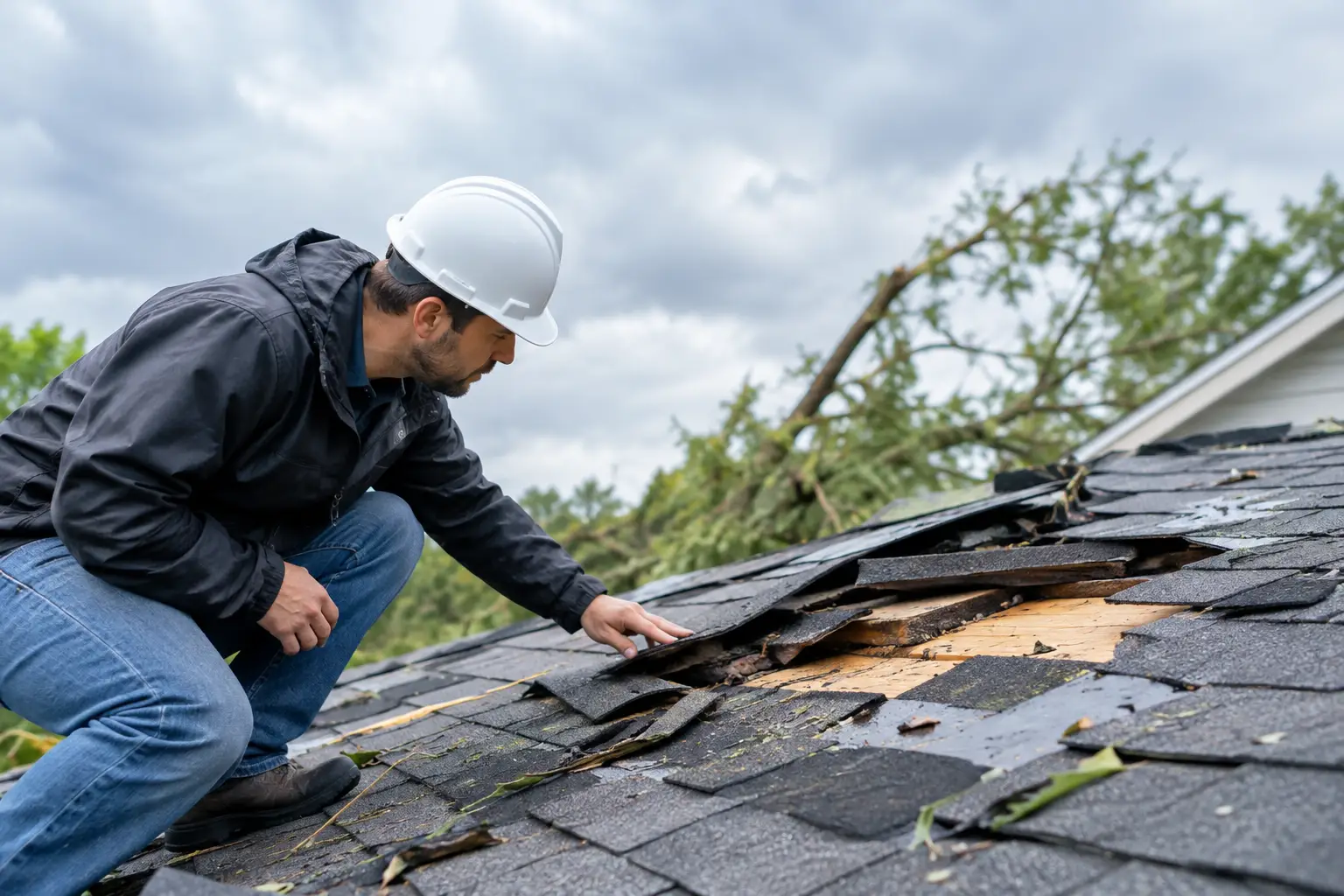
A North Texas storm can turn a sound roof into an urgent problem in a matter of minutes. Wind can lift shingles, hail can crack them, and driving rain can force water through openings that were not visible from the ground. Emergency roof repair after storm damage is about more than fixing what you can see. The first goal is to protect people, prevent the damage from spreading, and get a clear picture of what happened before repairs begin.
For homeowners and commercial property managers across Dallas-Fort Worth, a fast, steady response can make the difference between a contained roof repair and extensive damage to insulation, ceilings, walls, inventory, or electrical systems.
Start With Safety, Not the Roof
Do not climb onto a roof during or immediately after a storm. Wet shingles, loose decking, fallen branches, lightning risk, and hidden structural damage make a damaged roof dangerous even for experienced property owners. If power lines are down or touching the structure, stay clear and contact the utility provider or emergency services.
Inside the building, move people, furniture, electronics, and valuable materials away from active leaks. Place containers beneath dripping water if it is safe to do so. If water is collecting in a ceiling and causing a visible bulge, avoid standing below it. Water-soaked drywall can fail without warning.
For a commercial building, notify tenants or on-site staff, block access to affected areas, and protect equipment or inventory where possible. A small leak above a ceiling grid can travel farther than expected, so check adjoining rooms and corridors rather than focusing only on the first drip.
Take Simple Steps to Limit Water Damage
Temporary protection matters, but it needs to be done safely. From inside, you may be able to place plastic sheeting under a leaking area to direct water into a container. Towels can help protect flooring, and a fan or dehumidifier can begin drying a space after the leak is controlled.
Avoid using a tarp yourself unless it can be installed without getting on the roof and without creating another hazard. A tarp that is poorly secured can tear away in the next gust, damage shingles further, or put someone at risk. Professional emergency service crews can safely install temporary roof coverings, secure exposed areas, and determine whether water is entering through the roof, flashing, vents, skylights, or damaged gutters.
If rain has stopped and the exterior can be viewed safely from the ground, look for obvious signs such as missing shingles, displaced metal flashing, damaged roof vents, fallen limbs, or granules washed into downspouts. Do not treat a lack of visible damage as proof that the roof is fine. Hail impacts and wind-created openings are often difficult to spot without a close inspection.
Document the Damage Before Cleanup Goes Too Far
Once everyone is safe, take clear photos and video of what you can see. Document ceiling stains, wet insulation, damaged belongings, fallen branches, exterior debris, and any visible roof or gutter damage from the ground. Include wide shots that show the location and close shots that show the details.
Write down the date and approximate time of the storm, when you first noticed the issue, and the steps you took to prevent further damage. Keep receipts for reasonable emergency expenses, such as water extraction, temporary protection, or materials used to protect the interior. This record can be helpful when filing an insurance claim.
Do not throw away damaged materials or make permanent repairs before the condition has been documented unless leaving them in place would create a safety or health issue. Your insurer may need evidence of the loss, and a qualified roofing inspection can provide the documentation needed to explain the scope of storm damage.
Know When a Repair Can Wait and When It Cannot
Not every storm mark requires immediate roof work. A few loose granules in a gutter, for example, may not signal an active leak. But some conditions should be treated as urgent: water entering the building, missing shingles or exposed underlayment, punctures from branches, damaged flashing around chimneys or vents, and sections of roofing that have lifted or blown off.
The same is true for commercial roofs. Ponding water, open seams, punctured membrane, displaced edge metal, or water intrusion near HVAC curbs can quickly become more expensive if left exposed to another storm. Flat and low-slope roofs may hold water out of sight, allowing it to move beneath the membrane before it appears indoors.
A professional inspection separates cosmetic damage from conditions that threaten the roof system. That distinction matters because a repair may be the right solution when damage is isolated and the roof is otherwise in good condition. If the storm exposed widespread wear, repeated leaks, or damage across multiple roof slopes, replacement or restoration may offer better long-term value.
What a Professional Emergency Roof Inspection Should Cover
A dependable inspection should not stop at a quick look at the shingles. The contractor should assess the roof covering, flashing, penetrations, ridge areas, vents, gutters, and drainage paths. Inside, they should look for moisture staining, soft decking, wet insulation, and signs that water has migrated beyond the visible leak.
For storm-related work, the inspection should also identify the likely cause of damage and distinguish fresh storm impacts from older wear. That helps property owners make informed decisions and gives insurers a clearer record of the condition.
Reilly Roofing and Gutters provides no-cost, no-obligation inspections for North Texas property owners who need a clear answer after severe weather. The goal is straightforward: identify active risks, explain the recommended repair or replacement, and help you understand the next step without pressure.
Be Careful With Storm Chasers and Vague Promises
After major hail or wind events, contractors from outside the area often move quickly through affected neighborhoods. Some may offer immediate repairs without a thorough inspection, request large upfront payments, or make promises about what insurance will cover before anyone has reviewed the policy or damage.
A legitimate roofing contractor should provide clear contact information, proof of insurance, a written scope of work, and a realistic explanation of timing and materials. Ask whether the crew is manufacturer certified, who will perform the work, how the property will be protected during repairs, and what warranty applies once the job is complete.
Price matters, especially after an unexpected storm. But the lowest bid can become costly if it leaves damaged decking, flashing, or ventilation unaddressed. Quality emergency work should stabilize the roof now while supporting a repair that will hold up through the next Texas storm season.
How Insurance Claim Support Can Reduce the Pressure
Storm damage claims can feel confusing when you are already dealing with a leak or disrupted business operations. Your roofing contractor should not act as a public adjuster or guarantee a claim outcome. They can, however, provide inspection findings, damage photos, repair recommendations, and documentation that helps you communicate clearly with your insurance carrier.
If an adjuster visit is scheduled, having a contractor available to discuss the roof condition can help ensure that visible damage and necessary repair items are understood. This is especially useful when wind or hail damage affects more than shingles, including flashing, gutters, vents, or soft metal components.
Read your policy carefully and report the claim promptly. Coverage, deductibles, and claim requirements vary, so the right path depends on the type of loss and your individual policy. Keep copies of every estimate, photo, receipt, and insurer communication in one place.
Do Not Forget the Gutters and Drainage
Storm damage is not always limited to the roof. Bent, detached, or clogged gutters can send water behind fascia boards, over walkways, and toward the foundation. Hail can dent gutter sections, while wind and falling limbs can pull them away from the roofline.
After the roof is stabilized, have the gutter system checked for proper slope, secure hangers, clear downspouts, and drainage away from the building. A roof repair that solves the leak but ignores damaged drainage can leave the property exposed during the next heavy rainfall.
A Fast Call Can Protect the Rest of Your Property
When a storm damages your roof, you do not need to diagnose every detail before asking for help. Focus on safety, limit interior water exposure, document what you can, and arrange a professional inspection as soon as conditions allow. A prompt response gives you a better chance to protect the roof, the structure beneath it, and your options with insurance before a small opening becomes a much larger problem.
Local roofing help
Need storm damage repair in Dallas–Fort Worth?
Reilly Roofing and Gutters can inspect the issue, explain the practical options, and connect you with the Reilly office that serves your area.
Common questions
About Storm & Hail Damage
What should I do first after hail in Dallas–Fort Worth?
Stay off the roof, photograph visible damage from the ground, note the storm date, and arrange an inspection. Save receipts for any emergency work needed to prevent additional damage.
Can a roof have hail damage without an active leak?
Yes. Hail can bruise shingles, dislodge granules, or damage vents and flashing before water reaches the interior. An inspection can identify those conditions while evidence is still clear.
Can a roofer guarantee an insurance claim will be approved?
No. Coverage decisions belong to the carrier. A roofing contractor can document visible conditions, explain a repair or replacement scope, and be available during the adjuster visit when appropriate.