
Quick answer
After hail or high winds in Dallas–Fort Worth, document visible damage safely and arrange a professional inspection before making repair or insurance decisions.
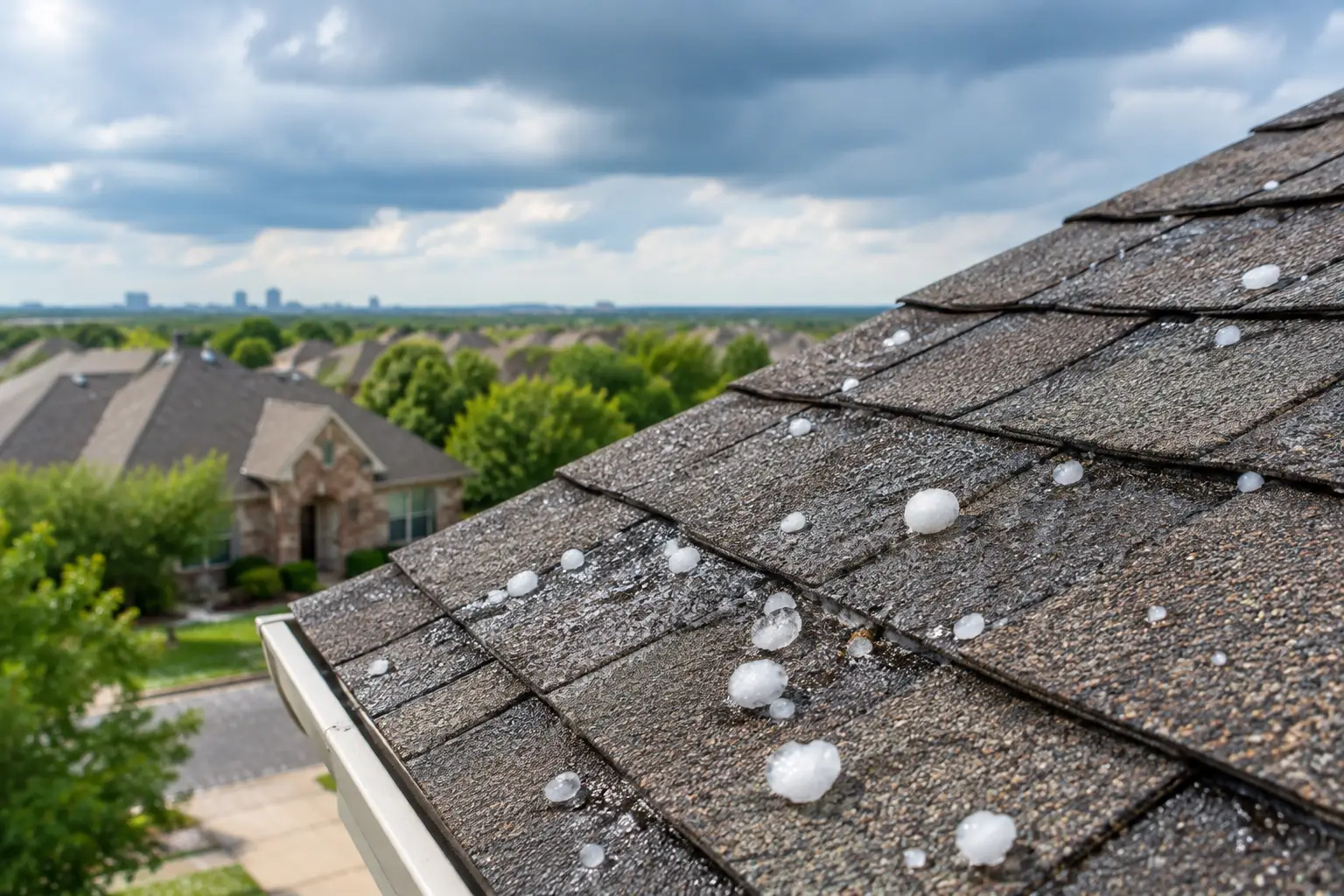
A North Texas hailstorm can leave a roof looking nearly normal from the driveway while creating bruised shingle mats, loosened granules, and weak points that later turn into leaks. The best shingles for hail are not simply the thickest-looking option or the most expensive color on a sample board. For homes in Dallas, Fort Worth, Plano, and Flower Mound, the right choice starts with a verified impact rating, then considers wind performance, installation quality, warranty terms, and the condition of the entire roofing system.
What Makes a Shingle Hail Resistant?
Hail-resistant asphalt shingles are tested for impact performance under standards such as UL 2218. The rating most homeowners will hear about is Class 4, the highest impact-resistance classification for this test. A Class 4 shingle must withstand repeated impacts from steel balls intended to simulate hail without cracking or splitting in the tested area.
That classification is useful, but it needs context. A Class 4 rating does not mean a roof is hailproof. Real storms involve changing wind speeds, hail sizes, roof slopes, temperatures, installation conditions, and impacts at vulnerable edges or penetrations. It does mean the shingle is designed to resist damage better than a conventional asphalt shingle under a recognized laboratory test.
Many impact-resistant shingles use SBS-modified asphalt. SBS is a rubber-like polymer blended into the asphalt to make the shingle more flexible. That flexibility can help the material absorb an impact rather than crack when hail hits. Some products use reinforced construction or specialized layers to improve impact performance as well.
For a homeowner replacing a roof after a claim or planning ahead before storm season, a Class 4 architectural shingle is often the most practical place to start. It offers the familiar appearance of an asphalt roof while adding a meaningful layer of protection against one of North Texas roofing's most common threats.
Best Shingles for Hail: Start With Class 4 Architectural Options
Architectural shingles, also called dimensional or laminated shingles, are generally a better fit for hail-prone homes than basic three-tab shingles. They are thicker, have layered construction, and provide a more substantial appearance. When available with a Class 4 impact rating, they combine curb appeal with stronger storm resistance.
A Class 4 architectural shingle is not automatically the best choice for every property. The right product depends on the roof design, budget, neighborhood requirements, desired color, and whether the roof has other issues that need correction. A steep roof with multiple valleys, skylights, vents, and chimneys needs careful material selection and experienced installation just as much as it needs a strong shingle.
Homeowners should also look beyond the word “impact-resistant” on a brochure. Ask which exact product line has the rating. A manufacturer may offer both standard and impact-resistant versions of similar-looking shingles. Confirm the test classification for the specific shingle, color, and system being installed rather than assuming every product in a collection performs the same way.
Why SBS-Modified Shingles Are Worth Considering
SBS-modified asphalt shingles are a strong option for many DFW roofs because flexibility matters in extreme weather. North Texas roofs experience hot sun, sudden temperature changes, high winds, and hail. A shingle designed to stay more pliable can better handle impact and thermal movement than a more brittle material.
The trade-off is cost. SBS-modified, Class 4 products usually cost more than standard architectural shingles. That added upfront expense may make sense if the home is in a frequently hail-affected area, if the owner plans to stay in the property for years, or if a more resilient roof is a priority. It may be less compelling for a short-term ownership plan or when other major home repairs need attention.
The key is to compare the complete roofing system, not only the shingle price. A quality replacement may include underlayment, ice and water protection where appropriate, starter shingles, ridge components, flashing work, ventilation evaluation, and proper fastening. A premium shingle cannot compensate for weak installation details.
Impact Rating Is Only One Part of Storm Protection
Hail often arrives with wind. A roof that resists an impact but loses shingles in a strong gust still leaves the home exposed. Look for a roofing system with wind-rated components that are designed to work together, including starter strips and ridge shingles. Correct nail placement and adequate fastening are essential to achieving the manufacturer’s intended performance.
Roof geometry also changes the conversation. Hail can strike every slope, but wind pressure is often more severe along eaves, rakes, ridges, and corners. Valleys direct large amounts of water through a concentrated area. Flashing around chimneys, sidewalls, vents, and skylights has to be installed correctly because those details can become leak points even when the field shingles remain intact.
Ventilation deserves attention, too. A poorly ventilated attic can contribute to excess heat and moisture, which may shorten roof life and affect the condition of the decking beneath the shingles. During a replacement, it is a good time to evaluate intake and exhaust ventilation instead of treating the roof as shingles alone.
Do Not Choose by Insurance Discounts Alone
Some insurers may offer a premium discount for qualifying Class 4 roofing products, but availability and savings vary by carrier, policy, location, and product. A discount should be treated as a possible benefit, not the reason to select a roof. Before choosing a shingle based on potential savings, speak with your insurance agent and ask what documentation the carrier requires.
If a roof is being replaced after hail damage, keep the process clear and documented. An inspection can identify visible storm-related conditions and help establish the scope of work. Your contractor can provide photographs and measurements that support an informed discussion with the adjuster, but the insurance carrier makes the coverage determination.
Also review your policy before a storm, not only afterward. Understand the deductible, whether the policy pays replacement cost or actual cash value, and whether cosmetic damage exclusions apply. Those details can affect the financial decision between a standard shingle and a higher-impact-rated product.
Color and Style Still Matter in Texas
A hail-resistant roof should protect the house without making you regret the look every time you pull into the driveway. Architectural shingles come in colors that suit brick, stone, siding, and modern painted exteriors. Darker tones can create contrast and hide some staining, while lighter or blended colors may better complement a warm-weather palette.
Color alone does not determine roof temperature or energy performance. Attic insulation, ventilation, roof design, and local shade all play a role. It is better to select a color you like from a product line that meets the needed impact and wind requirements than to choose a color first and compromise on performance.
If your home is in a neighborhood with architectural guidelines, confirm the approved color and profile before ordering materials. This simple step can prevent scheduling delays once the replacement is ready to begin.
When Repair Makes Sense and When Replacement Is Smarter
Not every hail event requires a full roof replacement. A newer roof with limited, isolated damage may be repairable if matching materials are available and the surrounding shingles remain in good condition. A professional inspection should check more than the shingles. Soft metal vents, flashing, gutters, downspouts, screens, and window components can provide useful evidence of storm impact and may need separate attention.
Replacement becomes more likely when hail damage is widespread, shingles are brittle or aging, granule loss is significant, or repairs would leave a patchwork appearance and uncertain long-term protection. If the roof is already near the end of its service life, installing a higher-impact-rated shingle may be the better long-term decision than paying for repeated repairs after each storm season.
For commercial properties, the decision is different. Low-slope systems such as TPO, PVC, and modified bitumen require a separate evaluation based on membrane condition, seams, drainage, insulation, and rooftop equipment. A shingle recommendation applies to sloped roof sections, not every commercial roof.
Choose the Installer as Carefully as the Shingle
A Class 4 label is valuable, but workmanship determines whether the finished roof performs as intended. Choose a contractor that can explain the full system, identify necessary flashing and decking repairs, provide product documentation, and discuss warranty eligibility in plain language. Manufacturer-certified crews and qualified installation practices can matter for both performance and available warranty coverage.
For homeowners dealing with recent hail, Reilly Roofing and Gutters can inspect the roof, document visible conditions, and help you understand the next steps before you commit to repair or replacement. A no-cost inspection gives you a clearer picture of the roof, gutters, and storm-related details without forcing a decision before you have the facts.
A strong roof is not built around the idea that storms will never cause damage. It is built to give your home a better chance when they do. Choose a shingle with a verified impact rating, pair it with a complete installed system, and have the roof inspected after significant hail before a small hidden issue becomes a leak.
Local roofing help
Need storm damage repair in Dallas–Fort Worth?
Reilly Roofing and Gutters can inspect the issue, explain the practical options, and connect you with the Reilly office that serves your area.
Common questions
About Storm & Hail Damage
What should I do first after hail in Dallas–Fort Worth?
Stay off the roof, photograph visible damage from the ground, note the storm date, and arrange an inspection. Save receipts for any emergency work needed to prevent additional damage.
Can a roof have hail damage without an active leak?
Yes. Hail can bruise shingles, dislodge granules, or damage vents and flashing before water reaches the interior. An inspection can identify those conditions while evidence is still clear.
Can a roofer guarantee an insurance claim will be approved?
No. Coverage decisions belong to the carrier. A roofing contractor can document visible conditions, explain a repair or replacement scope, and be available during the adjuster visit when appropriate.