
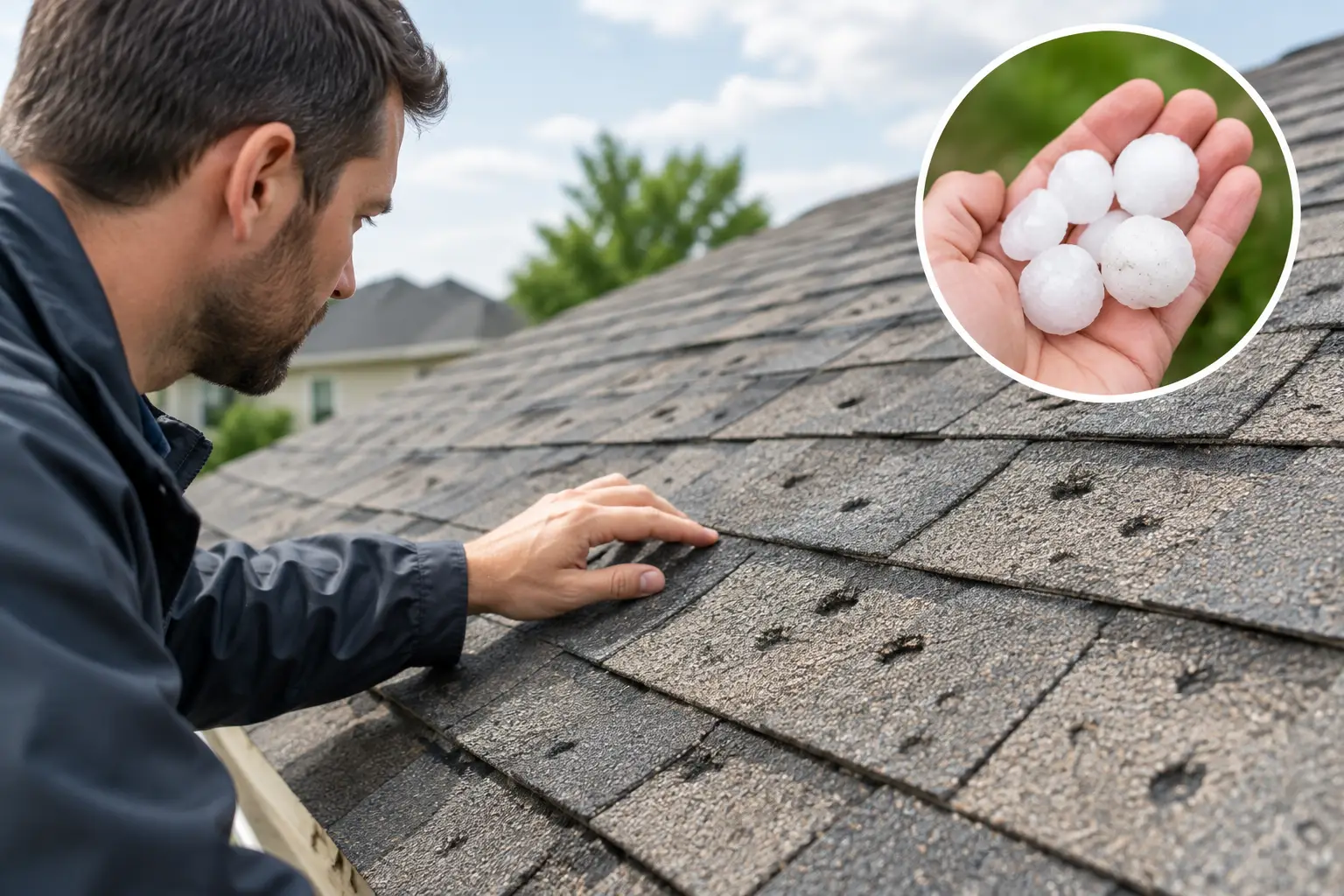
Quick answer
After hail or high winds in Dallas–Fort Worth, document visible damage safely and arrange a professional inspection before making repair or insurance decisions.
A North Texas hailstorm can leave a roof looking almost unchanged from the ground while causing damage that shortens its service life. Knowing how to identify hail damage helps you make a clear decision after a storm: monitor the property, schedule a professional inspection, or begin documenting a potential insurance claim before deadlines become a problem.
Hail damage is not always a leak today. A hard impact can fracture or bruise the protective asphalt layer of a shingle, knock granules loose, dent metal components, or weaken flashing. Water may not enter the home until months later, after heat, rain, and wind have worked on those compromised areas.
Start With Safe, Ground-Level Clues
Do not climb onto a roof after a storm. Wet surfaces, loose granules, and unseen damage make that a poor place for a homeowner to investigate. Start from the ground, walk the perimeter of the property, and look for evidence that hail struck more than just the roof.
Damage to softer exterior materials can be a useful signal. Check metal gutters and downspouts for fresh dents, especially on horizontal runs and elbow sections. Look at window screens, mailbox posts, fence caps, outdoor HVAC equipment, siding, deck furniture, and metal flashing that is visible from the ground. Fresh hail marks are often round or slightly irregular dents with sharp edges.
These clues do not automatically mean the roof needs replacement. They do tell you the property took an impact significant enough to justify a closer look. In DFW, a professional roof inspection is often the most reliable next step because hail size, roof age, shingle type, and the direction of the storm all affect the outcome.
How to Identify Hail Damage on Asphalt Shingles
Asphalt shingles are common across Dallas, Fort Worth, Plano, and Flower Mound, but hail damage can be difficult to recognize without getting close enough to inspect the material safely. The key is to distinguish a true impact from normal aging, foot traffic, blistering, or manufacturing variation.
Look for bruised or missing granules
A hail impact can knock away the colored mineral granules that protect the asphalt beneath. On a roof, this may appear as a dark spot, a circular area of exposed asphalt, or a patch that looks duller than the surrounding shingle. The damaged area may feel soft or slightly spongy when evaluated by a trained inspector because the shingle mat below has been bruised.
Granules in gutters are another clue, though not proof by themselves. Every asphalt roof sheds some granules over time, especially when it is new or nearing the end of its service life. A sudden buildup after a hailstorm is more concerning when it appears alongside dents on gutters, vents, or other metal surfaces.
Watch for cracked, split, or fractured shingles
Larger hail can crack shingles outright. Damage may show up as a circular crack, a star-shaped break, or an area where the shingle surface has split. On older, brittle roofs, even smaller hail may cause fractures that are easier to see than bruising.
Wind can also lift or crease shingles, so the pattern matters. Hail damage is usually scattered and impact-based. Wind damage more often affects roof edges, ridges, and slopes facing the direction of the wind. A property can have both after the same storm.
Check soft metals and roof accessories
Roof vents, metal valley flashing, drip edge, skylight frames, chimney caps, and pipe-jack flashing can reveal impacts more clearly than shingles. Fresh dents in these areas help an inspector understand the direction and force of the hail.
Do not assume a dented vent means every shingle is damaged, or that a clean-looking vent means the roof is fine. Roofing materials respond differently to hail. Still, accessory damage gives useful context when a professional assesses the full system.
Signs Inside the Home That Need Prompt Attention
Interior symptoms can point to an active roof problem, but hail damage does not always create an immediate ceiling stain. If you notice a new water spot on a ceiling, peeling paint, damp insulation in the attic, or water around a vent pipe after a storm, act quickly. Continued moisture can affect framing, insulation, drywall, and indoor air quality.
In the attic, use a flashlight and look for wet decking, active drips, rusted nail tips, or dark staining around roof penetrations. Avoid stepping between ceiling joists or disturbing insulation if the space is unsafe. Take clear photos of anything you find, then arrange for a qualified roofer to identify the source.
A leak after hail is not always caused by a punctured shingle. It could involve flashing, a vent boot, a ridge cap, or an area where hail worsened an existing weakness. That is why a full inspection matters more than guessing from a single stain.
Hail Damage to Gutters, Siding, and Flat Roofs
Gutters are part of the property’s drainage system, and hail can damage them in ways that are more than cosmetic. Dents may trap debris, change the pitch of a gutter section, loosen hangers, or create stress at seams. After a storm, check whether gutters are pulling away from the fascia, overflowing, or draining poorly during the next rainfall.
Vinyl and aluminum siding may show chips, cracks, punctures, or impact marks. Painted metal components may have chipped finishes that leave the material more exposed to corrosion. Photograph these areas before cleaning up or making temporary repairs.
Commercial and low-slope roofs need a different evaluation. On TPO, PVC, modified bitumen, and other flat-roof systems, hail can cause punctures, fractured seams, displaced surfacing, or subtle membrane bruising. Water may travel under the membrane before it appears inside the building, so property managers should not rely on a quick visual check from the ground. A professional assessment should include penetrations, drains, curbs, seams, and rooftop equipment areas.
Document the Storm Before Evidence Disappears
Good documentation makes the next steps easier, whether the roof needs a minor repair, ongoing monitoring, or an insurance claim. Take wide photos of each elevation of the home or building, then close-ups of dents, marks, damaged screens, fallen branches, and any interior water intrusion. Include photos of the date if your device records it automatically, and keep notes on when the storm occurred and when you first noticed damage.
Avoid throwing away damaged items or repairing everything before an inspection. Temporary measures to prevent further water entry are sensible, but take photographs first when it is safe to do so. Keep receipts for emergency mitigation or temporary repairs.
If you contact your insurer, report what you observed without trying to diagnose the entire roof yourself. An insurance adjuster and roofing contractor have different roles. The adjuster evaluates the claim under the policy, while an experienced roofer identifies roofing conditions, documents the scope of damage, and can help you understand the repair or replacement recommendations. No contractor can promise claim approval, but thorough documentation can make the process more straightforward.
When a Professional Inspection Makes Sense
Schedule an inspection after hail if you see exterior impact marks, find granules accumulating unusually fast, notice interior moisture, or know your neighborhood received significant hail. It is also wise to have the roof checked if it is older, has had prior repairs, or is approaching a planned sale or purchase. A buyer or seller does not want a hidden storm issue becoming a surprise during the transaction.
Not every hail event leads to replacement. Sometimes the right answer is a localized repair, a gutter repair, or simply a documented baseline for future maintenance. The condition of the roof, the extent of confirmed damage, local code requirements, and available matching materials all influence the recommendation.
For homeowners and property owners in Flower Mound, Plano, Fort Worth, or Dallas, Reilly Roofing and Gutters can provide a no-cost, no-obligation inspection and help document confirmed storm-related conditions. The best time to get clarity is while the evidence is still visible and before a small vulnerability turns into a leak during the next Texas downpour.
Local roofing help
Need storm damage repair in Dallas–Fort Worth?
Reilly Roofing and Gutters can inspect the issue, explain the practical options, and connect you with the Reilly office that serves your area.
Common questions
About Storm & Hail Damage
What should I do first after hail in Dallas–Fort Worth?
Stay off the roof, photograph visible damage from the ground, note the storm date, and arrange an inspection. Save receipts for any emergency work needed to prevent additional damage.
Can a roof have hail damage without an active leak?
Yes. Hail can bruise shingles, dislodge granules, or damage vents and flashing before water reaches the interior. An inspection can identify those conditions while evidence is still clear.
Can a roofer guarantee an insurance claim will be approved?
No. Coverage decisions belong to the carrier. A roofing contractor can document visible conditions, explain a repair or replacement scope, and be available during the adjuster visit when appropriate.