
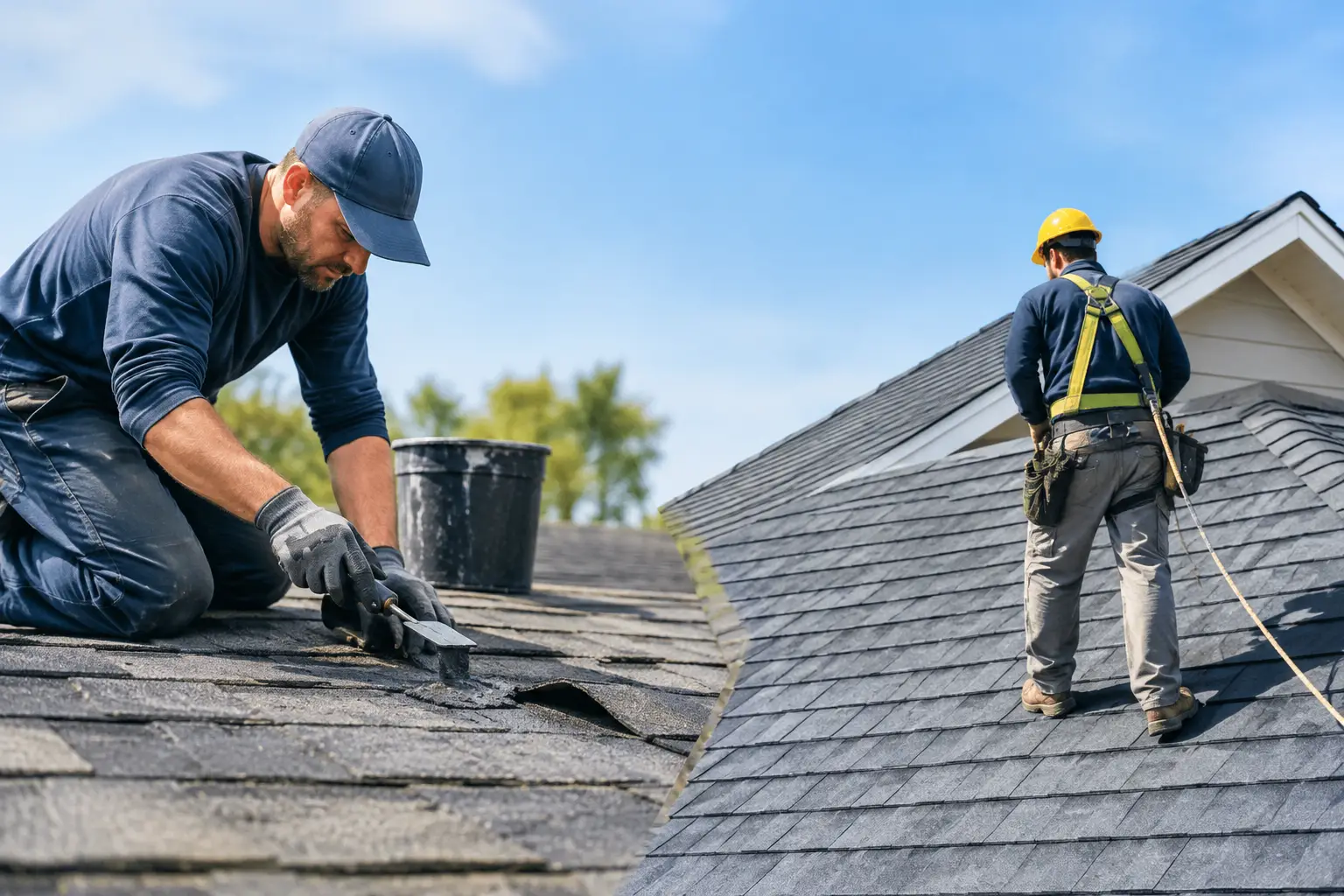
Quick answer
A roof leak or damaged detail in Dallas–Fort Worth is worth inspecting promptly; the visible stain or missing shingle is not always the point where water entered.
A ceiling stain after a North Texas storm can make one decision feel urgent: roof repair versus replacement. The right answer is not always the biggest project or the quickest patch. It is the option that stops water intrusion, protects the structure beneath your roof, and makes financial sense for the condition of the entire system.
A missing shingle, lifted flashing, or small leak may be a straightforward repair. But widespread hail impact, aging materials, repeated leaks, or compromised decking can turn a small-looking problem into a larger risk. A thorough inspection helps separate a repairable issue from a roof that has reached the point where replacement is the more responsible choice.
Roof Repair Versus Replacement Starts With the Whole Roof
It is easy to focus on the spot where water appeared inside. However, the visible leak is often only the symptom. Water can travel along decking, underlayment, rafters, or insulation before it reaches a ceiling. The damaged area may be several feet away from the stain.
That is why a proper evaluation looks beyond the obvious issue. A roofing professional should check the roof surface, flashing around vents and chimneys, valleys, pipe boots, ridge areas, gutters, attic ventilation, and accessible decking conditions. For commercial properties, the inspection should also account for seams, penetrations, drainage, ponding water, and the type of roofing membrane in place.
The question is not simply, “Can this be repaired?” Many roof problems can be repaired. The better question is, “Will this repair provide a dependable result without leaving the rest of the roof vulnerable?”
When a Roof Repair Is the Smart Choice
Repair is often the right path when damage is limited and the surrounding roof is still in sound condition. A focused repair can preserve a roof with useful life remaining while addressing the source of a leak before it causes interior damage.
Common repair situations include a few missing or damaged shingles after wind, cracked pipe boots, loose or damaged flashing, isolated punctures, minor valley damage, and leaks around a vent or skylight. An isolated section of storm damage may also be repairable if matching materials are available and the rest of the roofing system is performing well.
Age matters here. A newer roof with one localized defect usually deserves a repair first. The same defect on a roof near the end of its service life may be a warning that more repairs are coming.
A repair should also be compatible with the existing system. If the replacement shingles or materials cannot be matched closely, homeowners may need to weigh appearance against cost. A mismatch does not necessarily affect performance, but it can be noticeable from the street and may matter to homeowners planning to sell soon.
Signs Replacement May Be the Better Investment
Replacement becomes more practical when damage is broad, recurring, or tied to the roof’s overall age and condition. Patching one area after another can become expensive, frustrating, and less protective over time.
Look closely at the pattern of the problems. Multiple active leaks, shingles that are curling or losing granules across large areas, widespread hail strikes, soft or deteriorated decking, and repeated repairs in different locations all point toward a system-level issue. If water has reached the attic, insulation, or interior framing, the scope of work may need to go beyond the roof surface as well.
A replacement can also make sense after a severe hail or wind event. Hail damage is not always obvious from the ground, and a roof can look mostly intact while still having fractured shingle matting, displaced granules, or damaged soft metals. Those conditions can shorten the roof’s remaining life and make it more susceptible to future leaks.
For a property owner, replacement offers the benefit of starting over with a complete roofing system: new shingles or membrane, underlayment, flashing components, ventilation considerations, and manufacturer-approved installation details. It is a larger decision, but it can provide more certainty than continuing to repair an aging roof section by section.
The Cost Question Is Bigger Than Today’s Invoice
A repair generally costs less upfront because it addresses a limited area. That does not automatically make it the lower-cost choice over the next few years. If the roof needs another repair after the next storm season, then another after that, the total can begin to approach the cost of replacement without delivering the same long-term coverage.
Replacement requires a greater initial investment, but it may reduce the risk of recurring leaks, interior repairs, and disruption. It can also be the more sensible choice when a roof is old enough that new damage is likely to expose more weak points.
Insurance can affect the decision after covered storm damage, but coverage depends on the policy, the documented damage, and the insurer’s assessment. A contractor can provide inspection findings, photographs, and repair or replacement recommendations to support the claim process. No contractor can promise claim approval, so homeowners should review their policy and ask questions before making assumptions about coverage.
Don’t Overlook Gutters, Ventilation, and Drainage
A roof does not work alone. Gutters that overflow or pull away from the fascia can direct water where it does not belong. Clogged downspouts can cause water to back up near roof edges, while poor grading can keep water close to the foundation.
Attic ventilation also deserves attention. Excess heat and moisture in the attic can contribute to premature shingle aging, condensation, and higher strain on the roofing system. During a repair or replacement evaluation, it is worth asking whether ventilation and intake airflow are balanced for the home.
On commercial buildings, drainage is equally critical. Water that ponds on a flat or low-slope roof can accelerate membrane wear and place extra stress on seams and penetrations. A repair may solve one opening, while a larger drainage concern may require a more comprehensive plan.
How to Make a Confident Decision
Start with an inspection before authorizing work. A trustworthy assessment should explain what is damaged, why it happened, whether it is isolated or widespread, and what could happen if the issue is left alone. You should be able to see clear documentation and understand the recommendation without being pressured into a decision.
Ask whether the proposed repair addresses the actual source of the problem, not just the visible symptom. If replacement is recommended, ask what conditions make repair less reliable and which components of the new roofing system will be installed. For storm-related damage, ask how the inspection documentation can be used when speaking with your insurance adjuster.
Homebuyers should be especially careful with roofs that appear serviceable from the driveway but show signs of prior patching, granule loss, or aging flashing on closer inspection. A no-cost inspection before or shortly after purchase can clarify whether a repair is enough or whether a replacement should be included in future property planning.
A Local Inspection Can Bring Clarity
For homeowners and property managers in Flower Mound, Plano, Dallas, or Fort Worth, weather can change the condition of a roof quickly. Wind, hail, intense sun, and sudden heavy rain all expose weaknesses that were easy to miss before the storm.
Reilly Roofing and Gutters can inspect the roofing system, explain the condition in plain language, and help you understand whether a targeted repair or full replacement is the better fit. The goal is not to sell more roof than you need. It is to give you a clear path forward, backed by qualified workmanship and materials built for North Texas conditions.
If you have noticed a leak, water stain, missing shingles, granules in the gutter, or storm damage, do not wait for the next hard rain to test the roof again. A careful inspection now can protect your home, your budget, and your peace of mind.
Local roofing help
Need roof repair in Dallas–Fort Worth?
Reilly Roofing and Gutters can inspect the issue, explain the practical options, and connect you with the Reilly office that serves your area.
Common questions
About Roof Repair
Can a roof in Dallas–Fort Worth be repaired instead of replaced?
Yes, when the problem is isolated and the rest of the roof remains in sound condition. A professional inspection can identify the source, explain the repair, and flag when broader wear changes the recommendation.
How quickly should a roof leak be checked?
As soon as possible. Water can travel along framing or under roof materials before it appears indoors, so delaying a leak inspection can increase the affected area.
What happens during a roof repair inspection?
The inspection should review the visible symptom and the surrounding roof components, including shingles or membrane, flashing, penetrations, valleys, ventilation, and drainage where relevant.