
Quick answer
A roof leak or damaged detail in Dallas–Fort Worth is worth inspecting promptly; the visible stain or missing shingle is not always the point where water entered.
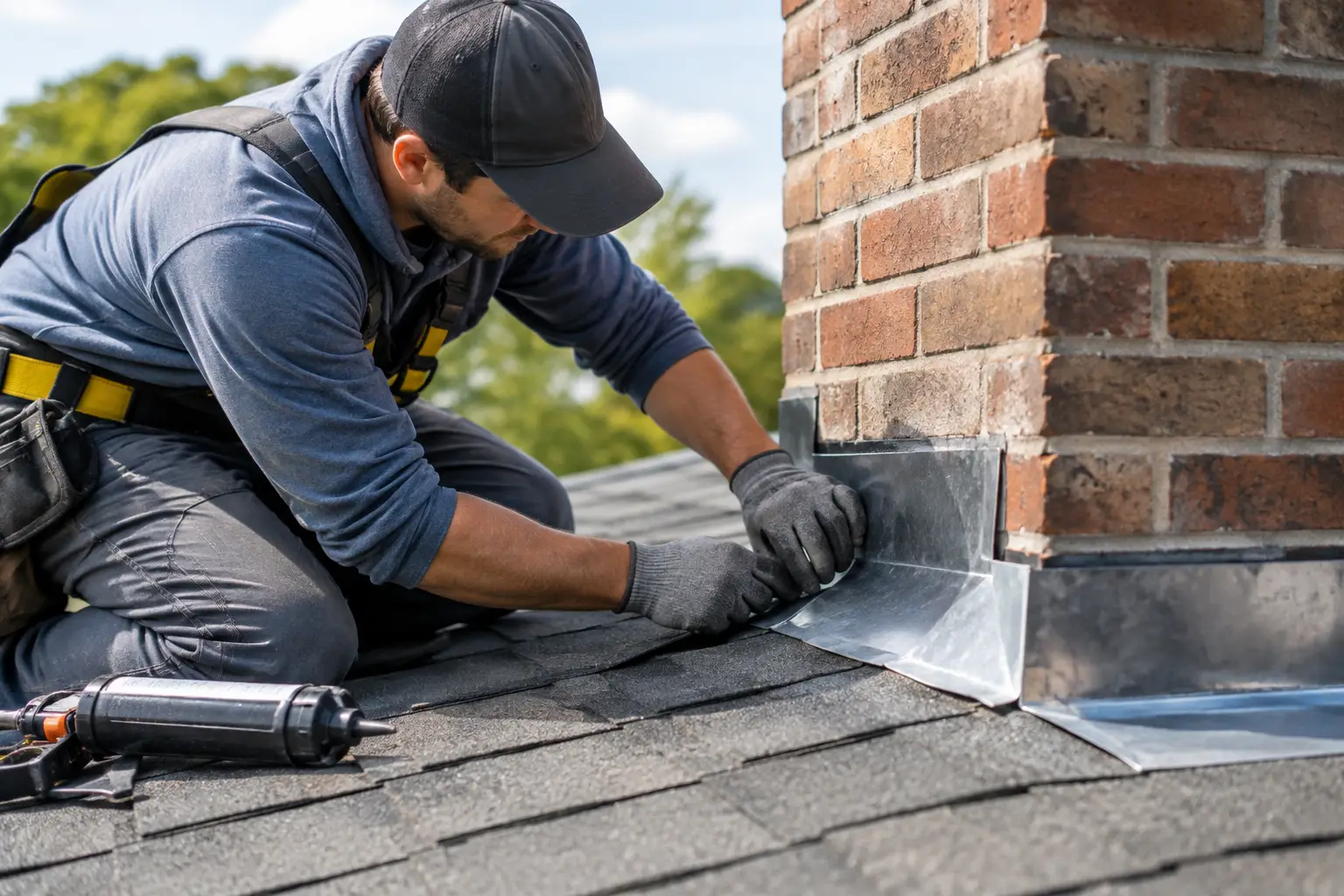
A leak that returns after a few storms often points to one overlooked part of the roof: the flashing. Roof flashing repair addresses the metal and waterproofing details installed where shingles meet a chimney, wall, vent, skylight, valley, or roof transition. These areas are designed to direct water away from vulnerable openings. When that system fails, rain can find its way beneath the roofing material and into the structure.
For homeowners in Dallas, Flower Mound, Plano, and Fort Worth, flashing deserves close attention after wind, hail, or heavy rain. The visible roof field may look intact from the ground while a lifted edge, cracked seal, or rusted flashing section allows water in. Catching the problem early can limit damage to decking, insulation, ceilings, and framing.
Why Roof Flashing Repair Matters
Flashing is not a cosmetic trim piece. It is a critical transition between roofing materials and penetrations through the roof. Shingles are effective at shedding water down a broad slope, but they cannot protect every corner, seam, or vertical surface by themselves. Flashing closes those gaps and guides water back onto the roof surface.
Common flashing locations include chimneys, plumbing vents, exhaust vents, skylights, dormers, sidewalls, valleys, and roof-to-wall intersections. Each location uses a detail suited to its purpose. Step flashing, for example, is woven with shingles along a wall. Counterflashing protects the top edge of chimney flashing. Pipe boots seal around plumbing vents. A problem with any one of these details can create a leak that appears several feet away from the actual entry point.
That is why applying a visible patch from inside the attic or spreading sealant over a suspicious area is rarely a lasting answer. Water follows framing, underlayment, and roof decking before it drips through a ceiling. The repair has to start at the source.
Signs Your Flashing May Be Failing
A water stain near a chimney, exterior wall, skylight, or bathroom vent is a clear reason to have the roof inspected. But flashing failures do not always announce themselves with an active ceiling leak. Sometimes the first warning is a loose metal edge, deteriorated sealant, or a shingle pattern that looks uneven around a penetration.
From the ground, you may notice flashing that has shifted, lifted, or pulled away from a wall. In the attic, look for dark water marks on the underside of roof decking, damp insulation, mold-like staining, or daylight around a vent pipe. After a major North Texas storm, granules in gutters and damaged shingles near flashing can also signal that wind or hail compromised the surrounding system.
A few symptoms deserve a prompt call to a roofing professional:
- Water spots that grow after rain or appear near a chimney, skylight, or exterior wall
- Drips from a bathroom fan, range hood vent, or ceiling fixture
- Rust, cracks, gaps, or loose sections of exposed metal flashing
- Missing, torn, or lifted shingles beside a roof penetration
- Repeated leaks after a previous roof patch or sealant repair
Do not assume the roof is the only possible cause. Condensation around poorly insulated ducts and plumbing issues can also create moisture. A proper inspection separates those possibilities before repairs begin.
What a Proper Flashing Repair Can Involve
The right repair depends on the flashing type, the roof material, the age of the roof, and the condition of the surrounding shingles. On a relatively new roof with localized damage, a contractor may be able to remove affected shingles, replace the flashing detail, install new underlayment where needed, and integrate matching shingles correctly.
For a chimney, repair can involve replacing step flashing and counterflashing, correcting loose mortar or masonry connections, and restoring the water-shedding path around the chimney base. For a plumbing vent, the solution may be a new pipe boot and replacement shingles around it. Skylight repairs can be more involved because the flashing kit, curb, glass seal, roofing material, and installation method all need evaluation.
Sealant has a role, but it should support a correctly installed flashing detail rather than substitute for one. Roofing cement or caulk may temporarily slow a leak, yet it can dry out, crack in Texas heat, and conceal a more serious issue underneath. If flashing is bent, corroded, improperly layered, or no longer integrated with the shingles, replacement is generally the better long-term decision.
Sometimes a localized repair is not the most sensible investment. If flashing failures are occurring across an older roof, shingles are brittle, or the roof has widespread storm damage, replacing the roofing system can provide better protection and warranty value. A reliable contractor should explain that trade-off clearly rather than treating every leak as a replacement job.
Why Storm Damage Makes Flashing Vulnerable
North Texas weather can stress a roof in ways that are not immediately obvious. High winds may lift shingles beside a wall or chimney and break the seal that protects the flashing edge. Hail can dent soft metal, crack vent boots, and bruise shingles around penetrations. Repeated heat cycles can shrink or harden sealants over time.
After a storm, avoid climbing onto the roof to inspect the flashing yourself. Wet shingles, steep slopes, and metal details are a dangerous combination. Take note of interior symptoms, photograph damage that is safely visible from the ground, and arrange a professional inspection.
If storm damage is found, detailed inspection documentation can also help you understand whether it may be appropriate to file an insurance claim. Insurance coverage depends on your policy, deductible, damage findings, and the insurer's assessment. A contractor can document roofing conditions and help you prepare for the adjuster process, but no contractor should promise claim approval.
The Difference Between a Repair and a Patch
A repair restores how the roof system is supposed to shed water. A patch may only cover where water appears to be entering. The difference matters most around flashing because these areas require materials to overlap in the correct sequence.
For example, a wall-flashing repair may require carefully removing shingles so new step flashing can be installed between each course. Simply fastening metal over the exterior surface can leave pathways behind it. Likewise, sealing the top edge of old flashing without addressing missing fasteners, damaged shingles, or a failed underlayment layer may delay rather than solve the leak.
Workmanship also matters. Fasteners should be placed where they will not create unnecessary water entry points. Shingles must be reinstalled with proper exposure and sealing. The finished repair should direct water naturally, not depend entirely on exposed caulk. These details are difficult to verify from the ground, which is why trained roofing crews and clear repair documentation are worthwhile.
When to Schedule an Inspection
Schedule an inspection when you see a water stain, notice damage after a storm, or find signs of wear around roof penetrations. It is also smart to have flashing checked during annual roof maintenance, especially if your roof is approaching the later portion of its expected service life.
Do not wait for a small stain to become an active ceiling leak. Moisture trapped beneath roofing materials can damage decking and encourage deterioration long before the problem becomes dramatic indoors. Early repairs are often more contained, less disruptive, and easier to schedule than emergency work after a major rain event.
For property managers and commercial building owners, the same principle applies. Flat and low-slope roof systems rely heavily on flashing at parapet walls, penetrations, curbs, drains, and equipment transitions. Small failures at these details can allow water to travel across insulation and affect a broad area before it is visible inside.
Reilly Roofing and Gutters can inspect suspected flashing issues and explain whether the roof needs a focused repair, storm-damage documentation, or a broader replacement plan. Homeowners in the Dallas-Fort Worth area deserve a direct answer before a small roof detail turns into interior damage. If a leak keeps coming back, have the flashing inspected before the next hard rain tests it again.
Local roofing help
Need roof repair in Dallas–Fort Worth?
Reilly Roofing and Gutters can inspect the issue, explain the practical options, and connect you with the Reilly office that serves your area.
Common questions
About Roof Repair
Can a roof in Dallas–Fort Worth be repaired instead of replaced?
Yes, when the problem is isolated and the rest of the roof remains in sound condition. A professional inspection can identify the source, explain the repair, and flag when broader wear changes the recommendation.
How quickly should a roof leak be checked?
As soon as possible. Water can travel along framing or under roof materials before it appears indoors, so delaying a leak inspection can increase the affected area.
What happens during a roof repair inspection?
The inspection should review the visible symptom and the surrounding roof components, including shingles or membrane, flashing, penetrations, valleys, ventilation, and drainage where relevant.