Quick answer
A roof leak or damaged detail in Dallas–Fort Worth is worth inspecting promptly; the visible stain or missing shingle is not always the point where water entered.
A Dallas-Fort Worth attic can feel brutally hot by early afternoon, but extreme heat alone is not the problem. The problem is heat and moisture that cannot escape. Roof ventilation repair restores the airflow your roofing system needs to manage those conditions, helping protect the roof deck, insulation, shingles, and living space below.
Many ventilation issues stay out of sight until there is a larger concern: a musty attic, high cooling bills, curling shingles, mold growth, or a roof leak that seems to have no obvious source. For homeowners in Flower Mound, Plano, Fort Worth, and Dallas, a professional inspection is the safest way to separate a ventilation problem from storm damage, flashing failure, or a more direct roofing defect.
What roof ventilation is supposed to do
A properly designed attic ventilation system moves air through the attic rather than trapping it there. Intake vents, commonly located at the soffits or eaves, allow outside air to enter. Exhaust vents near the ridge or high on the roof allow warmer, moisture-laden air to leave. Together, they reduce attic heat in summer and help control condensation when outdoor temperatures drop.
Ventilation does not make an attic the same temperature as the outdoors, and it is not a substitute for insulation or air sealing. Those systems work together. Insulation slows heat transfer into the home; air sealing limits conditioned air and household moisture from entering the attic; ventilation gives excess heat and moisture a path out.
That distinction matters because adding more roof vents without diagnosing the full system can create new problems. A roof needs balanced intake and exhaust, compatible vent types, and clear airflow paths. It also needs every penetration through the roof covering to be correctly flashed and sealed.
Signs you may need roof ventilation repair
Some symptoms are visible from the ground or inside the home. Others only show up during an attic inspection. If you notice one issue, it may be minor. If several are happening together, it is time to have the roof and attic evaluated.
- The attic feels unusually hot, stale, or humid, even when the weather is mild.
- Insulation is damp, compressed, moldy, or blocking soffit vents along the attic perimeter.
- You see rust on nails, metal connections, ductwork, or bathroom fan components in the attic.
- Shingles curl, blister, or age unevenly, especially on roof slopes that receive the most sun.
- Ceiling stains, peeling paint, or mildew appear near exterior walls or bathroom ceilings.
- A bathroom exhaust fan releases moist air into the attic instead of through a proper exterior vent.
- Ridge vents, box vents, turbine vents, or soffit vents are damaged, blocked, missing, or poorly installed.
A high electric bill by itself does not prove a ventilation issue. Older insulation, leaky ductwork, inefficient equipment, and air leaks around attic access points can all contribute. Still, when cooling costs rise along with a very hot attic or premature shingle wear, ventilation deserves a close look.
Why North Texas roofs face extra stress
North Texas roofs are asked to handle prolonged summer heat, sudden downpours, high winds, hail, and rapid temperature changes. Those conditions can expose weaknesses in a roof ventilation system quickly.
Wind can loosen ridge caps, crack plastic vents, damage turbines, or lift flashing around roof penetrations. Hail can fracture vent covers and leave openings that admit rain. Debris can clog intake areas at the eaves. After a storm, it is easy to focus on missing shingles while overlooking damaged vents that are just as critical to keeping the attic dry.
Heat adds another layer of stress. When the attic stays excessively hot, the underside of the roof deck and the roofing materials above it endure more severe temperature swings. Ventilation is not a guarantee against shingle aging, but a balanced system helps the roof perform under the conditions it was designed to handle.
What a professional ventilation inspection should include
Roof ventilation repair should begin with diagnosis, not a quick recommendation to add a powered fan or replace one visible vent. A qualified roofer should inspect the roof exterior, attic interior, insulation, and the routes used by bathroom, kitchen, and dryer exhausts.
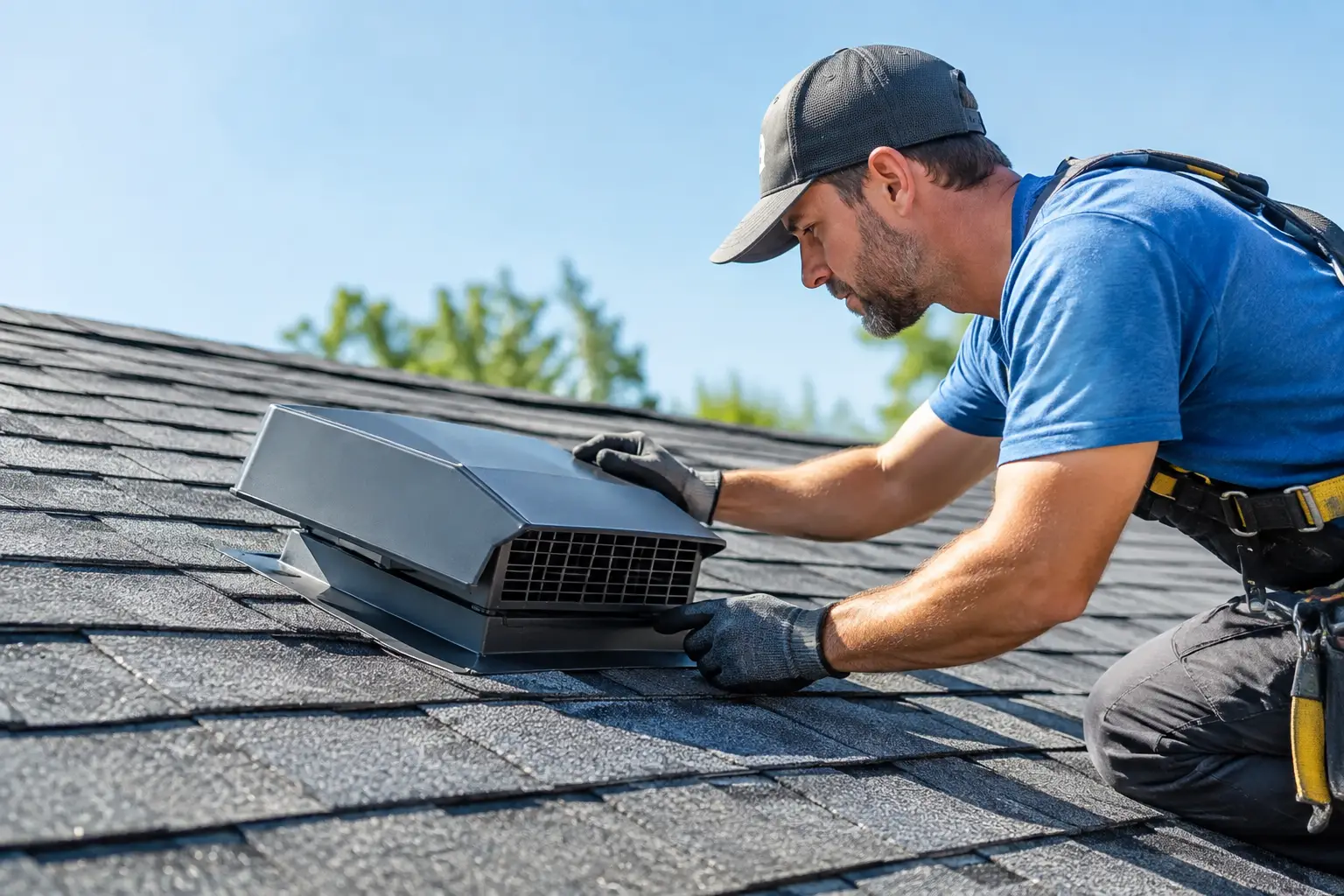
From the roof, the inspection should look for damaged vent housings, cracked boots, loose fasteners, compromised flashing, improperly placed exhaust vents, and signs that multiple exhaust styles are competing with each other. For example, combining ridge vents with powered attic fans can interfere with natural airflow if the system is not designed carefully.
Inside the attic, the inspection should check whether soffit openings are clear and whether insulation has been packed against the eaves. It should also identify moisture staining, mold-like growth, wood deterioration, rust, and daylight showing through unintended openings. The roof deck may reveal evidence of a leak long before a ceiling stain appears in the home.
The goal is to determine whether the problem is ventilation, a roof leak, poor attic air sealing, an improperly vented appliance, or a combination of issues. That matters because each requires a different repair plan.
Common repairs and when replacement makes more sense
A straightforward repair may involve replacing storm-damaged vents, resealing flashing, restoring blocked soffit ventilation, installing proper baffles to keep insulation out of intake paths, or correcting an exhaust duct that ends in the attic. If a ridge vent is damaged in a limited area, replacing that section and the affected ridge cap shingles may be enough.
In other cases, the ventilation problem is tied to the roof's original design or to an aging roof nearing replacement. If the roof has widespread shingle damage, deteriorated decking, repeated leaks, or insufficient ventilation throughout, addressing the system during a roof replacement is often more practical. It allows the contractor to correct intake and exhaust ventilation while installing compatible roofing materials and flashing.
Commercial properties need the same level of diagnosis, though the details differ. On low-slope systems such as TPO, PVC, or modified bitumen, ventilation concerns may involve roof assemblies, insulation, penetrations, and interior humidity rather than conventional ridge and soffit vents. Property managers should have moisture concerns assessed promptly, especially when they occur near mechanical equipment or ceiling systems.
Avoid quick fixes that create bigger problems
Homeowners sometimes try to solve attic heat by adding more exhaust vents wherever space is available. That can weaken the balance of the system or introduce additional leak points. A roof penetration is not just a hole with a cover over it. It must be integrated into the roofing system with correct flashing, fasteners, and weatherproofing.
Powered attic fans also deserve a careful conversation. They can be useful in specific designs, but they are not an automatic answer. If there is not enough intake ventilation, a fan may pull conditioned air from the home through ceiling gaps, which can increase energy use and bring humid indoor air into the attic.
Do not cover soffit vents with insulation, close attic vents to keep out cold air, or vent bathrooms directly into the attic. Each choice can trap moisture where it does the most damage. If pests or wind-driven rain are entering through an opening, the solution should preserve required airflow while correcting the entry point.
When to call for an inspection
Call for a roofing inspection after hail or wind damages roof vents, when you see water staining or persistent attic moisture, or before making major insulation or ventilation changes. It is also smart to have ventilation reviewed if you are buying a home with an older roof, replacing a roof, or noticing shingles deteriorate sooner than expected.
Reilly Roofing and Gutters can inspect the roofing system and attic ventilation conditions, explain what is causing concern, and outline whether repair or broader roofing work is appropriate. If storm damage is part of the issue, clear documentation can also help you understand what to discuss with your insurance carrier. No contractor can promise claim approval, but a thorough inspection gives you better information for the process.
A dry, properly ventilated attic is easy to overlook because it does its work quietly. Give it attention before heat, moisture, or a damaged roof vent turns a manageable repair into a larger roofing problem.
Local roofing help
Need roof repair in Dallas–Fort Worth?
Reilly Roofing and Gutters can inspect the issue, explain the practical options, and connect you with the Reilly office that serves your area.
Common questions
About Roof Repair
Can a roof in Dallas–Fort Worth be repaired instead of replaced?
Yes, when the problem is isolated and the rest of the roof remains in sound condition. A professional inspection can identify the source, explain the repair, and flag when broader wear changes the recommendation.
How quickly should a roof leak be checked?
As soon as possible. Water can travel along framing or under roof materials before it appears indoors, so delaying a leak inspection can increase the affected area.
What happens during a roof repair inspection?
The inspection should review the visible symptom and the surrounding roof components, including shingles or membrane, flashing, penetrations, valleys, ventilation, and drainage where relevant.