
Quick answer
After hail or high winds in Dallas, TX, document visible damage safely and arrange a professional inspection before making repair or insurance decisions.
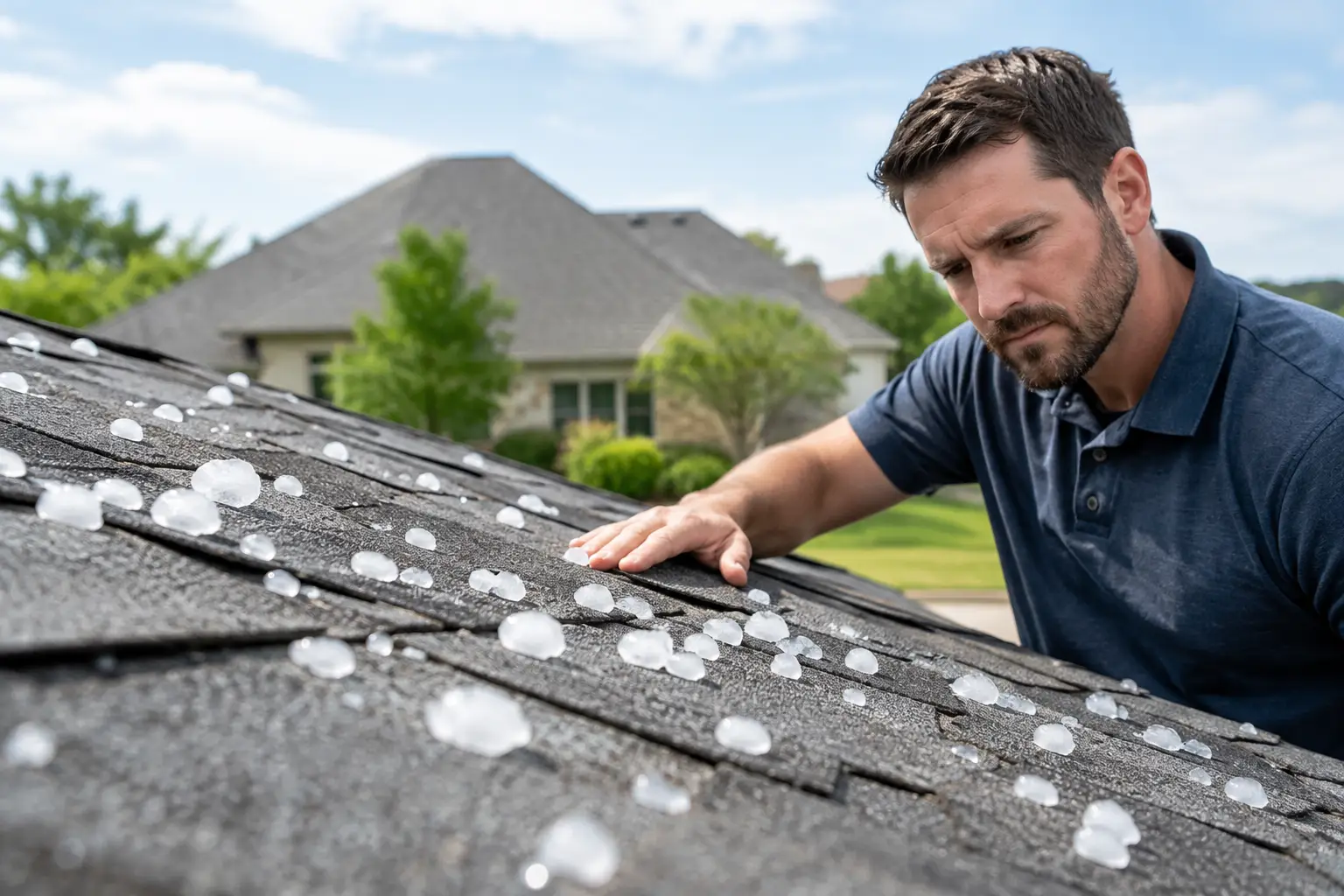
A Dallas hailstorm can leave a roof looking perfectly normal from the driveway while shortening the life of its shingles overhead. That is what makes Dallas hail damage signs easy to miss and costly to postpone. Hail impacts can bruise the asphalt mat beneath a shingle’s surface, loosen protective granules, dent metal components, and create vulnerabilities that do not become leaks until the next hard rain.
After a storm, the right question is not simply, “Do I see a hole?” It is whether the roof, gutters, vents, and surrounding exterior took impacts that need a closer look. A timely professional inspection gives homeowners and property managers a clear picture before a small issue turns into interior water damage.
Why Hail Damage Is Not Always Obvious
Hail varies widely from one side of Dallas to another. A storm can produce a few minutes of intense impacts over one neighborhood and barely touch the next. Wind direction, roof slope, tree cover, and the age of the roofing material all affect how damage appears.
On an asphalt shingle roof, hail often causes a bruise rather than a clean puncture. The shingle may still lie flat and keep out water for the moment, but its protective granule layer can be knocked loose and the underlying material weakened. Over time, sun, heat, wind, and rain work on that compromised area.
Older roofs can be more susceptible because shingles naturally become less flexible with age. However, newer roofing systems are not automatically exempt from inspection. Even a newer roof can sustain damage to vents, flashing, gutters, or shingles during a severe North Texas storm.
Dallas Hail Damage Signs to Check From the Ground
Safety comes first. Do not climb onto a roof after a storm, especially if surfaces are wet, debris is present, or you do not have proper fall protection. You can identify several useful clues from the ground and document them with photos for your records.
Start with the gutters and downspouts. Fresh dents, dings, cracked seams, chipped paint, or distorted sections can indicate the size and force of hail that reached the property. Metal gutter damage does not always mean the roof is damaged, but it is a meaningful signal that an inspection is worthwhile. Check screens, window frames, garage doors, fences, outdoor equipment, and mailbox posts as well. Multiple impact marks on these surfaces help establish that hail struck your property.
Look at the roof from several angles. You may notice dark spots, uneven areas, missing shingle tabs, exposed underlayment, or a scattered accumulation of granules near downspout exits. Granule loss is not always hail-related. Some granules shed normally as shingles age, and new roofs can release excess granules after installation. What matters is whether the loss is sudden, concentrated after a storm, or paired with visible impact marks.
Also inspect roof penetrations from the ground. Damaged vent caps, cracked plastic vents, dented metal flashing, loose ridge caps, and bent turbine vents can allow water into the roofing system. These components are often more visibly affected than the shingles themselves.
What a Hail Mark on a Shingle Can Look Like
A trained inspector looks for patterns that are difficult to confirm from the ground. On asphalt shingles, hail impacts may appear as round or irregular dark spots where granules have been displaced. The area can feel soft or bruised because the shingle’s underlying mat has been affected. Fresh impacts may reveal exposed asphalt, while older marks may be harder to distinguish from normal wear.
Not every circular mark is hail damage. Blisters, manufacturing variations, foot traffic, staining, algae, and natural aging can create marks that look similar at first glance. This is why a reliable inspection should include more than a quick glance at a few shingles. The inspector should evaluate multiple roof slopes, accessories, drainage components, and the overall condition of the system.
Interior Clues That Need Prompt Attention
By the time hail damage becomes visible inside, water may already be moving through the roof assembly. Check attic spaces, ceilings, upper walls, and closets after a major storm and again after the next rainfall.
Water stains, peeling paint, damp insulation, musty odors, or drips around light fixtures deserve prompt attention. A stain does not always point directly to the entry point. Water can travel along decking, framing, pipes, or insulation before appearing on a ceiling. A roofing professional can trace likely sources without assuming every interior moisture issue requires a full roof replacement.
For commercial properties, pay close attention to ceiling tiles, roof drains, parapet areas, rooftop equipment curbs, and interior areas beneath seams or penetrations. Flat and low-slope roofs can sustain hail-related membrane damage that is less obvious than dents on a metal gutter. Punctures, fractured coatings, damaged flashings, and stressed seams may require a different inspection approach than a residential shingle roof.
When to Schedule a Professional Inspection
Schedule an inspection after a storm when you see dents on exterior metal, displaced shingle material, granules in gutters, damaged vents, or any new leak. It is also smart to have the roof evaluated if nearby homes are receiving storm assessments, even when your roof appears intact. Hail paths are inconsistent, and a professional inspection can help separate actual storm damage from ordinary aging.
Do not wait for a leak to make the call. Waiting may allow water intrusion to spread into decking, insulation, drywall, or electrical areas. On the other hand, an inspection should not pressure you into work you do not need. The purpose is to document the roof’s current condition, explain what was found, and provide a clear recommendation for repair, maintenance, or replacement when warranted.
Homebuyers and property managers should be especially careful after recent severe weather. A roof can be a major part of a property decision, and a general visual check may not reveal whether a recent storm affected its remaining service life. An independent roofing inspection provides useful information before repair responsibilities become more complicated.
Documenting Damage for an Insurance Claim
If you suspect storm damage, take clear photos from safe ground-level positions before making temporary repairs or cleaning up all visible evidence. Photograph dents in gutters and downspouts, damaged vents, fallen branches, shingle debris, interior staining, and the date-stamped weather conditions if available. Keep records of emergency mitigation, such as a tarp or water removal, along with receipts.
Then arrange for a qualified roofing inspection. A detailed contractor assessment can identify affected roof components and help you understand the scope of recommended work. If you choose to file a claim, thorough documentation can make conversations with your insurer and adjuster more straightforward.
An insurance claim is not guaranteed simply because a storm occurred or because a roof has wear. Policies, deductibles, exclusions, prior damage, roof age, and the insurer’s findings all matter. Avoid any contractor who promises approval, promises to cover your deductible, or encourages you to sign before you understand the proposed work. A dependable contractor should explain the condition of the roof, provide documentation, and support you through the adjuster process without making promises they cannot control.
Protect the Roof While You Decide What Comes Next
If active water is entering the property, take reasonable steps to limit further damage. Move belongings away from the affected area, place containers under drips when safe, and contact a roofing professional for emergency protection. Do not attempt a DIY roof repair during wet or windy conditions.
For less urgent concerns, avoid power washing the roof or aggressively sweeping shingles to “see” the damage. Those actions can remove granules and complicate the condition of the surface. Keep gutters clear enough to drain properly, but use caution around damaged sections and avoid pulling on loose downspouts or roof-edge materials.
Reilly Roofing and Gutters helps Dallas-area property owners understand what a storm did to their roofing system, gutters, and related components. A no-cost inspection can provide the documentation and straightforward guidance needed to make the next decision with confidence. If hail has recently crossed your area, checking the roof now is one practical way to protect the property before the next Texas downpour tests it.
Local roofing help
Need storm damage repair in Dallas, TX?
Reilly Roofing and Gutters can inspect the issue, explain the practical options, and connect you with the Dallas office.
Common questions
About Storm & Hail Damage
What should I do first after hail in Dallas, TX?
Stay off the roof, photograph visible damage from the ground, note the storm date, and arrange an inspection. Save receipts for any emergency work needed to prevent additional damage.
Can a roof have hail damage without an active leak?
Yes. Hail can bruise shingles, dislodge granules, or damage vents and flashing before water reaches the interior. An inspection can identify those conditions while evidence is still clear.
Can a roofer guarantee an insurance claim will be approved?
No. Coverage decisions belong to the carrier. A roofing contractor can document visible conditions, explain a repair or replacement scope, and be available during the adjuster visit when appropriate.