Quick answer
A commercial roof issue in Dallas–Fort Worth needs a system-specific inspection before a small leak, drainage problem, or damaged detail becomes a larger repair.
A ceiling stain above a tenant space, a wet spot near rooftop equipment, or water pooling after a North Texas storm can turn into a business problem quickly. Commercial flat roof repair is not simply about stopping a visible leak. It is about finding where water entered, protecting insulation and decking, and making a repair that holds up through heat, hail, wind, and standing water.
For Dallas-Fort Worth property owners and managers, the best outcome is usually early action. A small seam failure may be repairable with a targeted fix. Left through several rain events, that same opening can saturate insulation, spread beneath the membrane, and create a much larger restoration decision.
Why flat roof leaks are rarely simple
Flat commercial roofs are built with low slopes that move water toward drains, scuppers, or gutters. They are not meant to hold water for long periods. When drainage is restricted or the surface has lost its integrity, water can work its way into seams, penetrations, flashing, or damaged areas around equipment.
The interior symptom is often not directly below the actual failure. Water can travel along the roof deck, insulation, or framing before appearing inside the building. That is why applying sealant to the first spot that looks suspicious is not a dependable repair strategy. The roof needs a systematic inspection that follows the moisture path and evaluates the surrounding assembly.
Heat also matters in North Texas. Repeated expansion and contraction can stress membrane seams and flashing details. Hail and wind can puncture or loosen materials, while rooftop service traffic can damage an otherwise sound surface around HVAC units, vents, and access paths.
Signs you should schedule an inspection
A leak after a hard rain deserves attention, but it is not the only warning sign. Bubbling or blistering in the membrane can indicate trapped moisture or air. Open seams, cracked flashing, deteriorated sealant around penetrations, and membrane shrinkage also call for a closer look.
Inside the building, watch for stained ceiling tiles, peeling paint, unusual odors, damp insulation, mold concerns, or recurring leaks in the same area. A rising utility bill can sometimes point to wet insulation that is no longer doing its job, though an inspection is needed to confirm the cause.
Ponding water that remains more than 48 hours after dry weather is another concern. Some roof systems can tolerate limited ponding better than others, so it does not automatically mean replacement is required. Still, persistent standing water puts extra stress on seams and surface materials and should be evaluated before it becomes a leak.
What a proper commercial flat roof repair involves
The right repair starts with diagnosis, not guesswork. A qualified contractor should inspect the membrane, seams, flashing, drain areas, penetrations, edge metal, and locations where the roof meets walls or equipment curbs. The inspection should also consider prior repairs, the age of the roof, signs of trapped moisture, and whether storm damage may be involved.
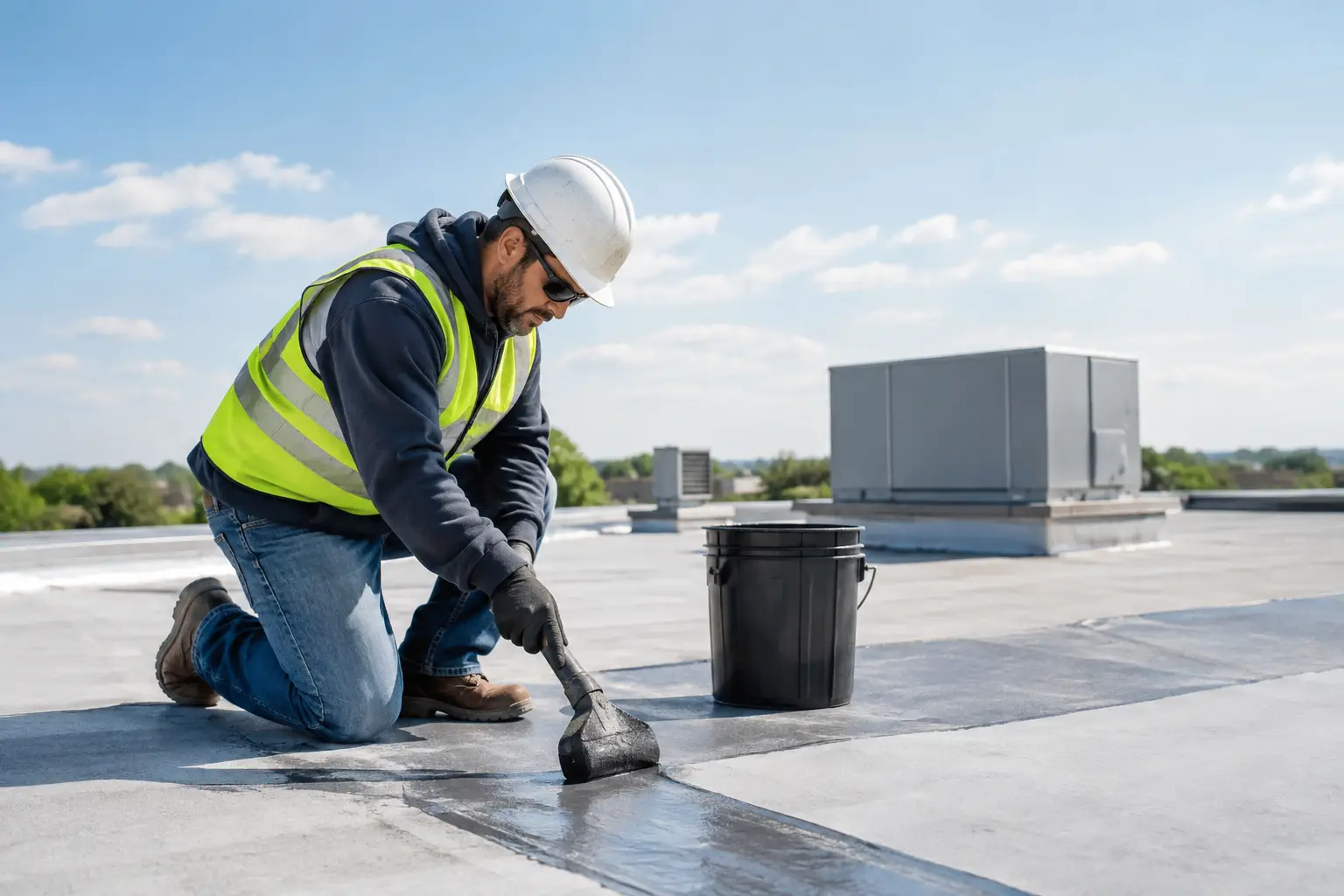
For a localized issue, commercial flat roof repair may involve cleaning and preparing the affected area, removing compromised material, addressing wet insulation when necessary, and installing compatible membrane patches or reinforced flashing details. The exact method depends on the system. TPO, PVC, modified bitumen, and other commercial roofing materials require different repair techniques and compatible products.
Compatibility matters. A repair that appears solid on the surface can fail early if the wrong material is used or the area is not properly prepared. On a TPO or PVC roof, for example, a heat-welded repair may be appropriate when the membrane condition allows it. Modified bitumen may require a different approach entirely. The goal is to restore the roof system, not create a temporary cover over the problem.
Drainage and details deserve equal attention
The membrane gets most of the attention, but many leaks start at roof details. Drains can clog with debris. Scuppers may not move water efficiently. Pipe boots, parapet-wall flashing, expansion joints, and equipment curbs are all common trouble areas.
If a roof repeatedly leaks in the same general location, the issue may be drainage, movement at a flashing detail, or damage from rooftop traffic rather than a simple puncture. Correcting the underlying cause helps prevent the same repair from returning after the next storm.
Repair or replacement: how to make the call
A repair is usually a smart investment when the damage is isolated, the remaining membrane is in serviceable condition, and the roof system is not nearing the end of its useful life. A well-executed repair can protect the building and buy valuable time for capital planning.
Replacement becomes more practical when leaks are widespread, insulation is saturated across larger areas, seams are failing in multiple locations, or repairs have become a recurring expense. A roof may also need replacement if its drainage design or existing installation problems are causing persistent performance issues.
There is no honest one-size-fits-all answer. A newer roof with storm damage may be an excellent repair candidate. An older roof with multiple active leaks may cost more to keep patching than to replace. A clear inspection report, photos, and a straightforward explanation of the options give owners and property managers the information needed to make a sound decision.
Storm damage and insurance documentation
Hail and wind can create commercial roof damage that is not obvious from inside the building. A hail impact may bruise, crack, or puncture certain materials, while wind can lift flashing and weaken seams. Even when a leak has not appeared yet, a post-storm inspection can identify damage before water reaches the interior.
When insurance may be involved, documentation matters. Photos, inspection findings, measurements, and a detailed scope of damage can help clarify the roof’s condition during the claims process. Insurance coverage depends on the policy, the cause of loss, and the adjuster’s findings, so approval should never be assumed. Still, having accurate roofing documentation can make the process less confusing and help property owners ask the right questions.
Reilly Roofing and Gutters provides commercial roofing inspections and can help property owners understand documented storm damage and the repair or replacement options in front of them.
Protect the building between inspections
Commercial roofs benefit from regular maintenance, especially before and after severe weather seasons. Property managers should keep roof drains, scuppers, and gutters clear, while limiting unnecessary foot traffic across the membrane. Any contractor servicing rooftop equipment should use designated walk pads where available and report visible damage promptly.
A scheduled annual inspection is a practical way to catch open seams, worn sealant, loose flashing, and drainage concerns early. Buildings with older roof systems, frequent HVAC access, nearby trees, or a history of ponding may need more frequent checks. Maintenance will not make an aging roof new again, but it can reduce surprise leaks and give owners time to plan wisely.
Choose a contractor who understands occupied buildings
Commercial roofing work affects more than the roof. Tenants, customers, employees, inventory, and operations all need consideration. A dependable contractor should communicate the scope clearly, coordinate access, protect the jobsite, and explain what work is needed now versus what can be planned later.
Ask whether the crew has experience with your specific roofing system, how they identify moisture beyond the visible leak, and what warranty applies to the proposed work. It is also reasonable to ask how the contractor will handle rooftop equipment, drainage details, and cleanup. Clear answers at the start help avoid costly assumptions later.
If your Dallas, Plano, Fort Worth, or Flower Mound commercial property has a recurring leak, visible roof damage, or standing water after storms, schedule a no-cost inspection before the next rainfall tests the roof again. The right repair is often the one completed while the problem is still contained.
Local roofing help
Need commercial roofing in Dallas–Fort Worth?
Reilly Roofing and Gutters can inspect the issue, explain the practical options, and connect you with the Reilly office that serves your area.
Common questions
About Commercial Roofing
How often should a commercial roof be inspected in Dallas–Fort Worth?
Most commercial properties benefit from at least an annual inspection and an additional check after hail, high winds, or a new leak. Buildings with aging roofs, ponding water, or regular rooftop traffic may need more frequent attention.
What should a commercial roof inspection include?
It should cover the membrane or roof covering, seams, flashings, drains, penetrations, edge details, visible moisture concerns, and any areas affected by rooftop equipment or foot traffic.
Can a commercial roof leak wait?
A leak can travel through insulation or decking before it becomes visible inside. Prompt documentation and a targeted repair often give an owner more options than waiting for the damage to spread.