
Quick answer
A commercial roof issue in Dallas–Fort Worth needs a system-specific inspection before a small leak, drainage problem, or damaged detail becomes a larger repair.
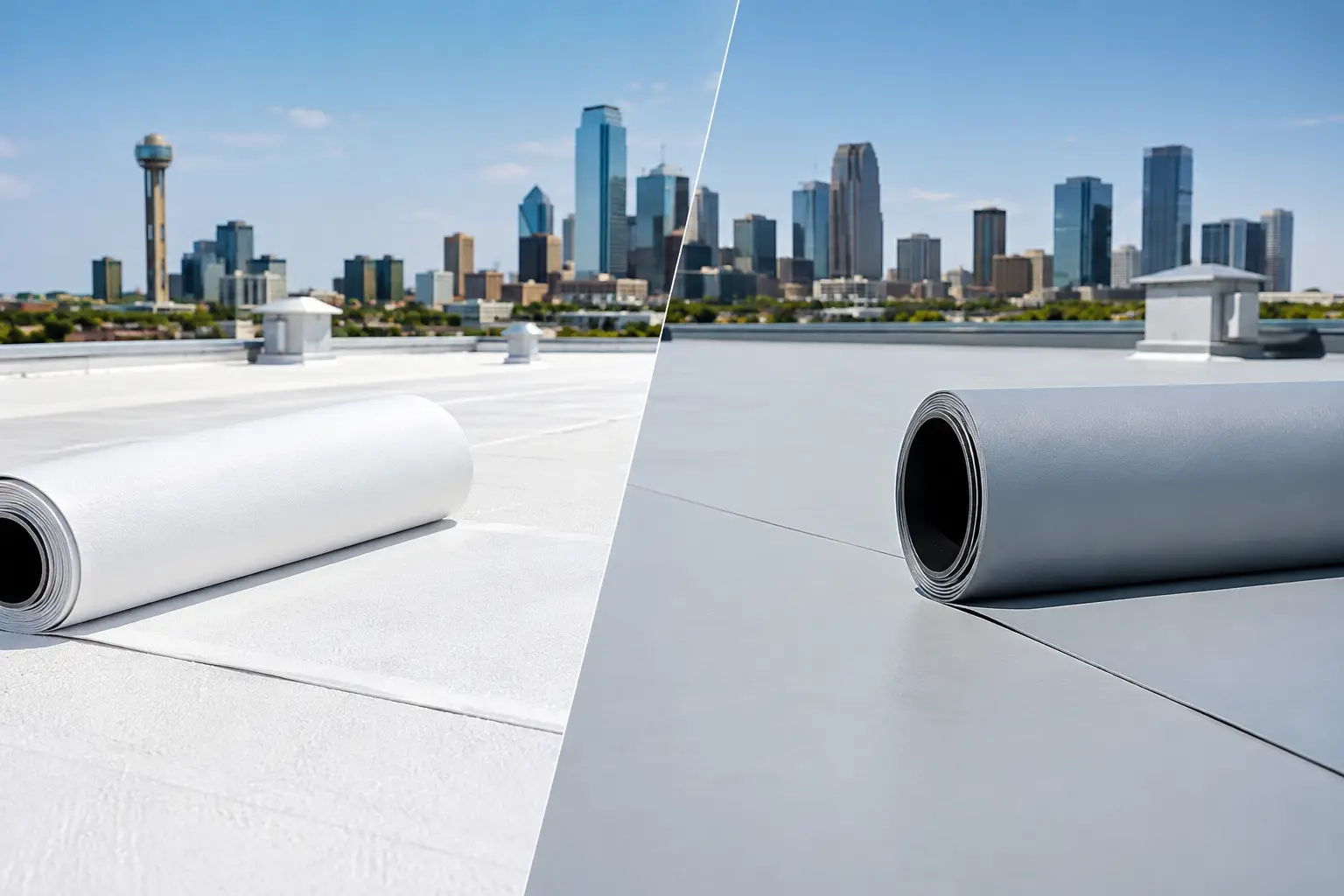
A flat-roof replacement is not a material decision you want to make from a brochure. On a Dallas-Fort Worth commercial building, the membrane has to handle punishing sun, sudden downpours, standing water, rooftop traffic, and the practical needs of the business below it. When comparing PVC vs TPO roofing, both are proven single-ply options, but they do not perform exactly the same way in every setting.
The better choice depends on what is happening on your roof now, what is inside the building, how the drainage performs, and how long you intend to own the property. A qualified inspection should come before a recommendation, especially if leaks, storm damage, or wet insulation may be part of the problem.
What PVC and TPO Roofing Have in Common
PVC and TPO are single-ply roofing membranes commonly installed on low-slope commercial roofs. Both are typically white or light colored, which helps reflect sunlight and can reduce heat absorbed by the roof surface. Both systems use heat-welded seams rather than relying only on adhesives or tape. When installed correctly, those welded seams create a strong, continuous weather barrier.
Each membrane may be installed using mechanical fasteners, adhesive, or ballast in certain applications. The exact assembly matters as much as the membrane itself. Insulation type, deck condition, slope, perimeter attachment, flashing details, drains, and penetrations all affect how a roof performs over time.
For a property manager or owner, the shared benefits are straightforward: a clean-looking reflective roof, good flexibility, and a system that can work well on offices, retail centers, warehouses, medical buildings, multifamily properties, and other low-slope structures.
PVC vs TPO Roofing: The Main Differences
PVC stands for polyvinyl chloride. It has been used in commercial roofing for decades and is particularly respected for its resistance to grease, oils, fats, and many chemicals. That characteristic can make PVC a strong fit for restaurants, commercial kitchens, food-processing facilities, and buildings where rooftop exhaust could expose the membrane to grease.
TPO stands for thermoplastic polyolefin. It is widely used because it offers strong overall performance at a competitive cost. TPO has become a common choice for commercial roofs throughout North Texas, especially where a reflective, heat-welded membrane is needed without the higher material cost that can come with PVC.
The two materials may look similar from the ground, but the formulation and use case can be different. PVC often costs more upfront. TPO can be a very practical value, provided the selected membrane, installation details, and maintenance plan fit the building.
Heat and UV exposure
North Texas heat is not a minor consideration. Long stretches of intense sun can stress roofing materials, flashings, sealants, and exposed metal details. Quality PVC and TPO membranes are designed to reflect sunlight, but product quality and installation standards matter.
A white membrane can help limit roof-surface temperatures compared with darker roof systems, yet it is not a substitute for proper insulation or ventilation planning. Your contractor should evaluate the full roof assembly instead of promising a particular energy result based on membrane color alone.
Chemical and grease resistance
This is where PVC often has a clear advantage. Grease discharged from kitchen exhaust systems can damage certain roofing materials over time. If a building has restaurant tenants, food service operations, or chemical exposure near rooftop equipment, PVC may be the safer long-term recommendation.
TPO can still be appropriate in many commercial applications, but it should not be treated as a one-size-fits-all answer where grease is present. The roof area around exhaust fans may need special attention regardless of the membrane selected.
Seams and leak resistance
Both PVC and TPO rely on hot-air welded seams. Properly welded seams are one of the biggest strengths of thermoplastic roofing. However, a strong seam is only as reliable as the crew installing it and the conditions on the roof during installation.
Leaks on low-slope roofs frequently develop at transitions, drains, curbs, penetrations, parapet walls, and edge metal rather than in the open field of the membrane. A proposal should clearly address these details. If it only names a membrane thickness and a square-foot price, it may leave too many important questions unanswered.
Flexibility and long-term wear
PVC has a long track record in commercial roofing and is known for holding up well in demanding environments. TPO quality has improved significantly over the years, but formulations vary by manufacturer. That makes manufacturer-approved installation and warranty eligibility especially important.
Neither membrane is maintenance-free. Storm debris, clogged drains, loose flashing, punctures from service work, and standing water can shorten the useful life of either system. Regular inspections give owners the opportunity to repair small issues before moisture reaches insulation or the roof deck.
Which Roof Is Better for a Dallas-Fort Worth Property?
For many offices, retail buildings, and warehouses without grease or chemical exposure, TPO may offer the performance and reflectivity the building needs at a more manageable initial investment. It is often a sensible choice when the existing roof assembly is in good condition for replacement and the owner wants a dependable commercial membrane system.
PVC may be the stronger choice for restaurants, facilities with chemical exposure, or properties where the added material cost is justified by the operating environment. It can also make sense for owners who prioritize its established performance history and want a system designed to handle tougher rooftop contaminants.
The answer is not always PVC or TPO alone. In some cases, a repair may be more appropriate than a full replacement. In others, trapped moisture, widespread membrane failure, storm damage, or deteriorated insulation means a new roof system is the more responsible path. A thorough inspection should identify the condition of the membrane, seams, flashings, drainage, insulation, and deck before a decision is made.
Cost Should Include More Than the Membrane
Comparing proposals strictly by the cost per square can lead to trouble. The membrane is only one component of a commercial roofing system. A lower bid may exclude tear-off, wet-insulation replacement, drain work, coping or edge-metal details, curb flashings, permits, or warranty requirements.
Ask what thickness of membrane is proposed, how the system will be attached, whether existing insulation will be reused, and how rooftop equipment will be flashed. Also ask how the contractor will protect the property during the work and keep the site clean for tenants, employees, or customers.
A clear scope helps owners compare comparable systems. It also reduces the chance of unexpected change orders after work begins. If wind or hail damage may be involved, inspection documentation can help establish the roof's condition for the insurance process. Documentation supports a claim, but no contractor can promise an insurer's approval.
Drainage and Maintenance Matter With Both Systems
A membrane roof should shed water toward drains, scuppers, or gutters. Some temporary ponding may occur on low-slope roofs, but persistent standing water deserves attention. It can collect debris, obscure damage, encourage deterioration around drains, and add unnecessary stress to the roof assembly.
After major wind or hail events, look for displaced edge metal, punctures, torn flashing, backed-up drains, and water stains inside the building. Do not wait for a small ceiling stain to become a disruption to operations. Commercial roof leaks can travel beneath the membrane or insulation before becoming visible indoors.
A practical maintenance plan includes scheduled inspections, drain and debris checks, and prompt repairs when damage is found. It also helps to coordinate with HVAC vendors, because rooftop service work is a common source of accidental punctures and disturbed flashings.
Make the Choice After a Roof Inspection
The best membrane is the one that fits your building's conditions and is installed as a complete, warrantable system. For a commercial property in Dallas, Fort Worth, Plano, or Flower Mound, that means looking beyond the label on the membrane and examining drainage, rooftop use, exposure, and the condition of the existing roof.
Reilly Roofing and Gutters can inspect a low-slope roof, explain whether PVC or TPO makes more sense for the property, and provide a clear scope for repair or replacement. The right decision should leave you with fewer unknowns, a roof system suited to the building, and a plan for protecting it long after the installation crew has left.
Local roofing help
Need commercial roofing in Dallas–Fort Worth?
Reilly Roofing and Gutters can inspect the issue, explain the practical options, and connect you with the Reilly office that serves your area.
Common questions
About Commercial Roofing
How often should a commercial roof be inspected in Dallas–Fort Worth?
Most commercial properties benefit from at least an annual inspection and an additional check after hail, high winds, or a new leak. Buildings with aging roofs, ponding water, or regular rooftop traffic may need more frequent attention.
What should a commercial roof inspection include?
It should cover the membrane or roof covering, seams, flashings, drains, penetrations, edge details, visible moisture concerns, and any areas affected by rooftop equipment or foot traffic.
Can a commercial roof leak wait?
A leak can travel through insulation or decking before it becomes visible inside. Prompt documentation and a targeted repair often give an owner more options than waiting for the damage to spread.