
Quick answer
A commercial roof issue in Dallas–Fort Worth needs a system-specific inspection before a small leak, drainage problem, or damaged detail becomes a larger repair.
A modified bitumen roof lifespan is not a fixed number stamped on the material. On a well-designed, professionally installed commercial roof, owners can often expect 20 to 30 years of service. In North Texas, however, intense summer heat, hail, wind, standing water, and deferred maintenance can move that timeline in either direction.
For a property owner or manager, the better question is not simply, “How old is the roof?” It is, “What condition is the membrane, flashing, drainage, and insulation in right now?” A 15-year-old modified bitumen roof with sound seams and regular maintenance may have useful life left. A much newer roof with storm damage or chronic ponding may need major repairs sooner.
How Long Does a Modified Bitumen Roof Last?
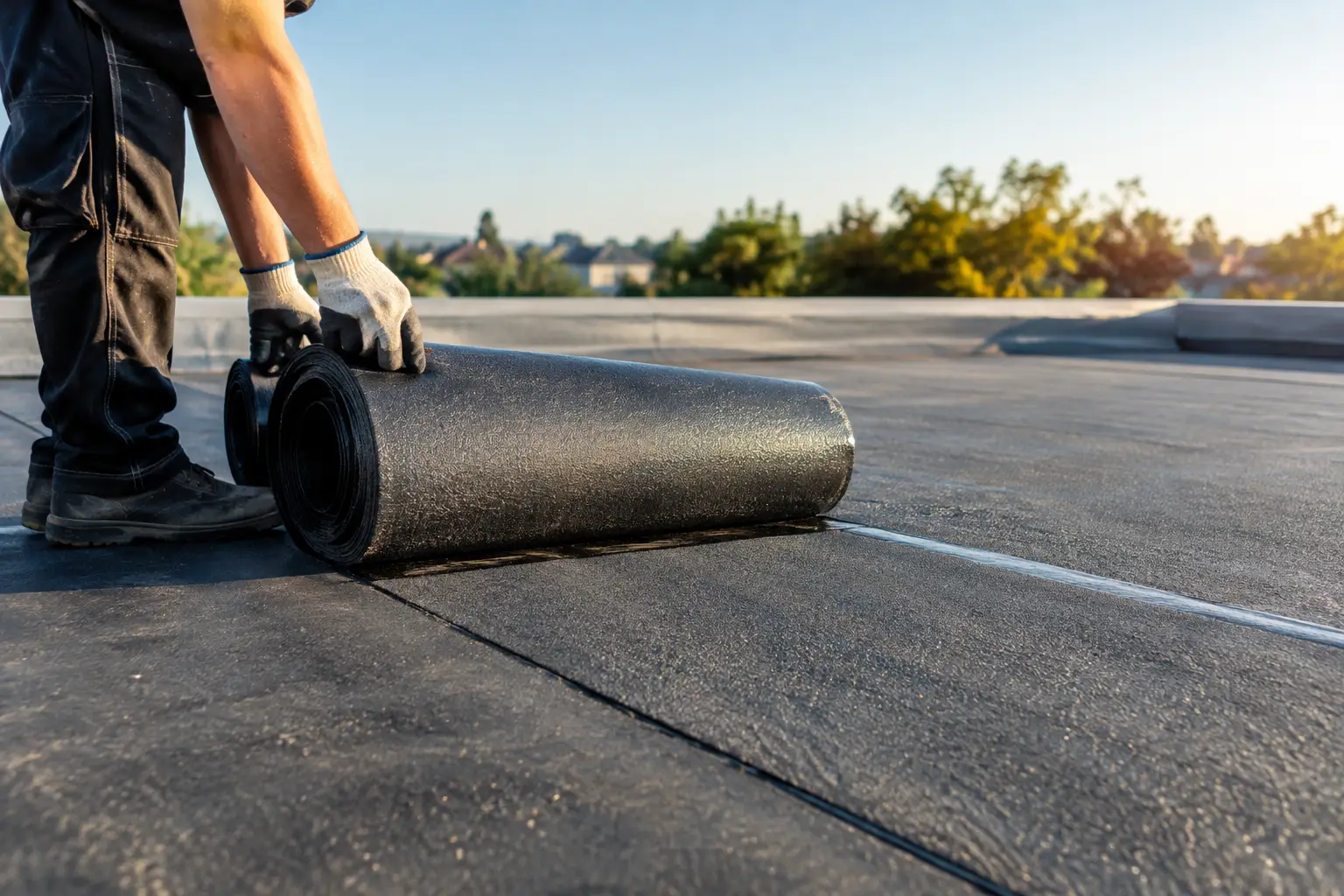
Modified bitumen is an asphalt-based commercial roofing system commonly installed on low-slope roofs. The membrane is reinforced with polyester or fiberglass and modified with polymers that improve flexibility, weather resistance, and durability. It may be installed with heat welding, cold adhesive, self-adhered sheets, or asphalt, depending on the system.
A properly installed system generally lasts about 20 to 30 years. Some roofs reach the higher end of that range when they have quality materials, proper drainage, protected flashings, and consistent maintenance. Others need replacement earlier because of installation defects, neglected leaks, storm impacts, or roof designs that allow water to sit too long.
The type of modified bitumen system matters, too. APP membranes are typically heat-welded and perform well under UV exposure when properly installed. SBS membranes remain more flexible and can be a practical choice where movement and temperature swings are concerns. Neither option is automatically better for every building. The roof assembly, installer experience, slope, drainage plan, and maintenance history all affect long-term performance.
What Affects a Modified Bitumen Roof Lifespan?
In Dallas, Fort Worth, Plano, and Flower Mound, a commercial roof must manage more than ordinary wear. Summer sun can accelerate membrane aging, while severe wind and hail can damage seams, flashings, and surface granules in a single storm.
Installation Quality and Detail Work
Modified bitumen is durable, but it is only as reliable as its seams and transitions. Field membrane areas get most of the attention, yet many leaks begin at penetrations, parapet walls, curbs, drains, skylights, and edge metal.
Poor seam adhesion, improperly tied-in flashing, or gaps around rooftop equipment can allow water beneath the membrane. Once moisture gets into the roof assembly, it can saturate insulation, weaken adhesive bonds, and spread farther than the interior leak location suggests. This is why a qualified inspection should look beyond the visible stain or active drip.
Drainage and Ponding Water
Low-slope does not mean no-slope. Modified bitumen roofs need drainage that moves water toward drains, scuppers, or gutters. When water repeatedly ponds after rain, it puts added stress on the membrane and exposes small defects for longer periods.
Blocked drains are a maintenance issue. Persistent ponding caused by inadequate slope, deck settlement, or poor drainage design may require a more involved solution. A repair may still be appropriate, but the underlying water-management problem should be addressed or the same area can continue to fail.
Texas Heat and UV Exposure
North Texas heat is hard on asphalt-based roofing. Over time, UV exposure can dry and weather the membrane surface, especially where protective granules have worn away. Thermal movement also matters. A roof expands in high heat and contracts as temperatures drop, placing stress on seams and flashing details.
A reflective coating can sometimes help reduce surface temperature and extend the service life of a roof that is otherwise in good condition. It is not a cure for wet insulation, open seams, failing flashings, or widespread membrane deterioration. Coatings work best as part of a planned maintenance or restoration strategy, not as a shortcut over active problems.
Hail, Wind, and Falling Debris
Hail damage on a modified bitumen roof may not always look dramatic from the ground. Impacts can dislodge granules, bruise the membrane, fracture aging materials, or create weak points that leak later. Wind can lift loose edge metal and flashing, putting the rest of the assembly at risk.
After a significant storm, a professional inspection provides useful documentation of the roof’s condition. If there is covered damage, clear findings can also help a property owner work through the insurance adjuster process. An inspection does not guarantee claim approval, but it gives you a factual starting point for repair decisions and claim discussions.
Maintenance and Earlier Repairs
Routine attention can make a meaningful difference in roof life. Clearing drains, removing debris, checking seams, and repairing small defects before water enters the assembly are practical steps that protect a larger investment.
The quality of past repairs matters as much as the number of repairs. Compatible materials and properly prepared surfaces are essential. Repeated patches applied over damp, dirty, or failing areas can mask a problem temporarily while allowing moisture damage to continue below.
Signs Your Modified Bitumen Roof Needs Attention
Waiting for a steady interior leak is rarely the best approach. By that point, water may have already traveled through insulation or along the deck before becoming visible inside the building.
Watch for blistering, cracking, exposed reinforcement, worn granules, loose laps, splitting around penetrations, deteriorated flashing, and water that remains on the roof well after rainfall. Inside, stained ceiling tiles, peeling paint, musty odors, or unexplained moisture around walls and rooftop equipment deserve prompt attention.
Not every issue means the roof has reached the end of its service life. A localized puncture, a separated seam, or a damaged pipe boot may be repairable. Broad membrane deterioration, recurring leaks in multiple areas, extensive saturated insulation, or widespread storm damage may point toward replacement or a restoration plan instead.
Repair, Restoration, or Replacement?
A useful roof decision starts with condition, not a one-size-fits-all recommendation. A contractor should evaluate the membrane, seams, flashings, drainage, insulation, deck condition, and the extent of any moisture intrusion.
Repair is often the sensible choice when damage is limited and the overall roof remains in good condition. It can stop active leaks and preserve remaining service life without replacing a system prematurely.
Restoration may be worth considering when the roof is aging but structurally sound, dry, and a suitable candidate for a compatible coating or targeted system upgrade. The roof must be carefully prepared, and problem areas need to be repaired first. Restoration is not appropriate for every modified bitumen roof.
Replacement becomes more practical when repairs are becoming frequent, the roof has widespread deterioration, moisture has affected insulation, or the existing system no longer provides dependable protection. A replacement also gives owners an opportunity to improve drainage, address insulation needs, and select a system designed for the building’s use and exposure.
A Better Maintenance Plan for North Texas Buildings
Commercial roofs benefit from a scheduled inspection at least once a year, plus an inspection after hail, high winds, or other severe weather. Spring and fall are often useful checkpoints, but the right schedule depends on the building, roof traffic, surrounding trees, drainage setup, and prior repair history.
During an inspection, the focus should include drains and scuppers, edge details, penetrations, field seams, rooftop units, previous repair areas, and signs of trapped moisture. Building owners should also keep records of inspections, repairs, leak reports, and storm observations. That history makes it easier to spot repeat issues and plan capital expenses before an emergency forces the decision.
Reilly Roofing and Gutters helps commercial property owners across Dallas-Fort Worth evaluate modified bitumen roofing systems, identify leak sources, and make practical repair or replacement decisions. If your roof has weathered a recent storm, is holding water, or has begun showing repeated leak symptoms, a no-cost inspection can clarify what is happening before a small issue becomes a larger interruption to your property.
The goal is not to squeeze every possible month from a failing roof. It is to protect the building with the right work at the right time - and give you a clear plan before the next Texas storm tests it.
Local roofing help
Need commercial roofing in Dallas–Fort Worth?
Reilly Roofing and Gutters can inspect the issue, explain the practical options, and connect you with the Reilly office that serves your area.
Common questions
About Commercial Roofing
How often should a commercial roof be inspected in Dallas–Fort Worth?
Most commercial properties benefit from at least an annual inspection and an additional check after hail, high winds, or a new leak. Buildings with aging roofs, ponding water, or regular rooftop traffic may need more frequent attention.
What should a commercial roof inspection include?
It should cover the membrane or roof covering, seams, flashings, drains, penetrations, edge details, visible moisture concerns, and any areas affected by rooftop equipment or foot traffic.
Can a commercial roof leak wait?
A leak can travel through insulation or decking before it becomes visible inside. Prompt documentation and a targeted repair often give an owner more options than waiting for the damage to spread.