
Quick answer
A commercial roof issue in Dallas–Fort Worth needs a system-specific inspection before a small leak, drainage problem, or damaged detail becomes a larger repair.
A roof leak rarely starts as a ceiling stain. On a commercial building, water may travel through insulation, along decking, or around mechanical penetrations long before it reaches an occupied space. That is why commercial roofing maintenance is not simply a way to make a roof last longer. It is a practical way to protect tenants, equipment, inventory, operations, and the budget behind the building.
For property owners and managers in Dallas-Fort Worth, maintenance matters even more after intense sun, high winds, hail, and sudden heavy rain. A roofing system that looked fine from the ground can have loose flashing, punctures, blocked drains, or stressed seams that only become obvious when the next storm moves in.
What Commercial Roofing Maintenance Should Catch
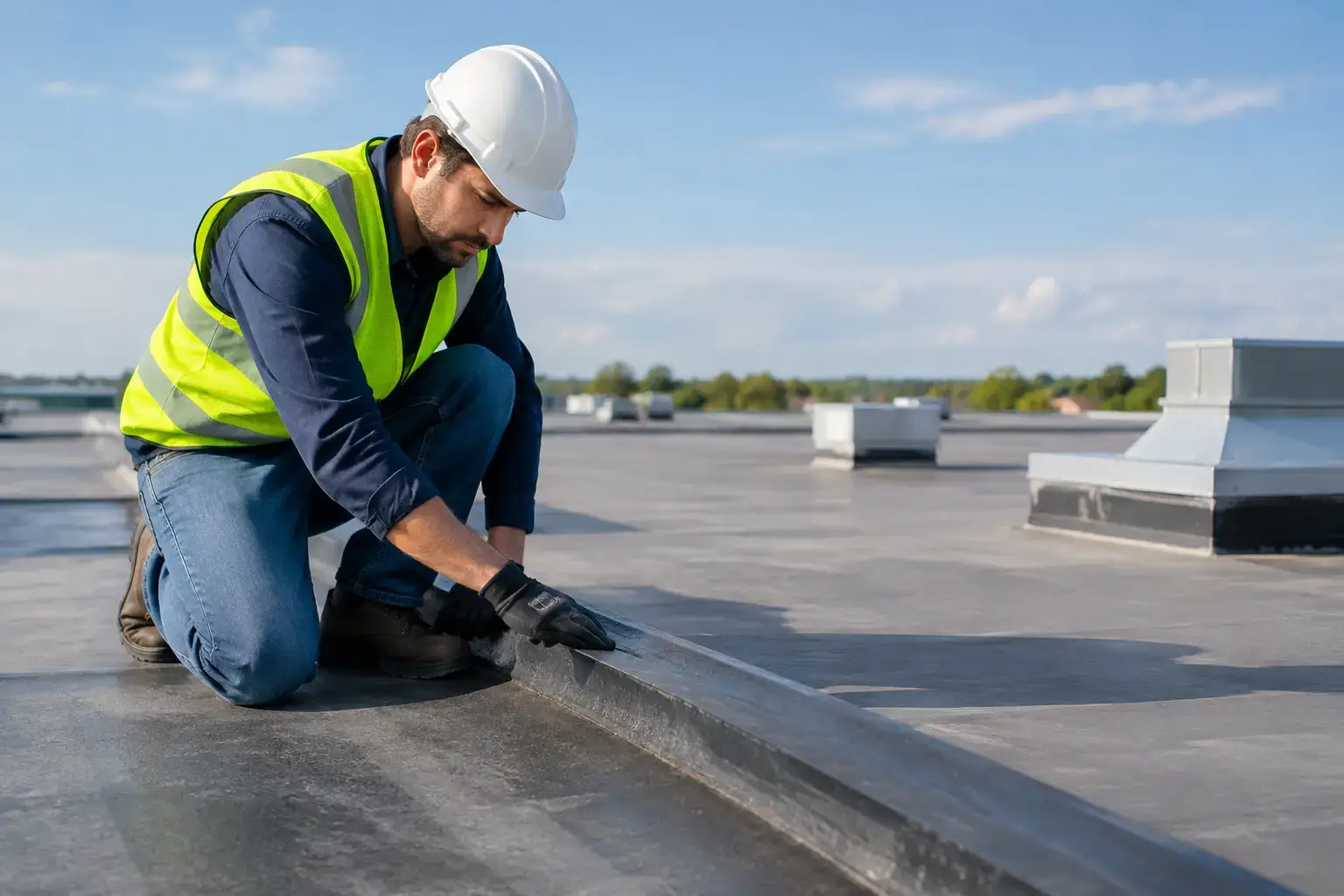
The purpose of a maintenance visit is to find small defects while they are still isolated and repairable. A qualified roofing professional looks beyond obvious leaks to assess the areas where commercial roofs commonly fail: seams, flashing, penetrations, drainage components, roof edges, and the field of the membrane itself.
On a flat or low-slope roof, standing water deserves prompt attention. Ponding water can place extra stress on the membrane, work into vulnerable seams, and accelerate wear around drains and scuppers. The issue may be debris in a drain basket, a damaged drain component, or a drainage design concern. The right correction depends on what is causing the water to remain on the roof.
Roof penetrations also require close attention. HVAC units, vent stacks, pipes, skylights, and conduits all interrupt the roof surface. Their flashing must remain secure and watertight as materials expand and contract through North Texas temperature swings. A small opening around one of these details can lead to hidden moisture in insulation or decking before anyone sees evidence indoors.
Maintenance should also include a careful look at edge metal, coping, parapet walls, and transition areas. Wind can lift loose components, and hail can damage surfaces in ways that are not immediately visible to a building owner. Catching those conditions early is usually far less disruptive than responding after water reaches the interior.
A Maintenance Schedule That Fits Your Roof
There is no single schedule that fits every commercial property. Roof age, material, building use, nearby trees, rooftop equipment, and past repair history all affect the right approach. Still, most commercial roofs benefit from professional inspections at least twice a year, typically before and after the seasons that bring the greatest weather stress.
Additional inspections are wise after a significant hailstorm, high-wind event, or unusually heavy rain. Waiting for a leak to appear can mean waiting until water has already moved below the roofing membrane. An inspection after severe weather gives a property owner a clear record of the roof's condition and identifies repairs that should be addressed before the next storm.
Buildings with frequent foot traffic on the roof may need more frequent checks. Service technicians accessing HVAC equipment can accidentally puncture a membrane, dislodge a protective pad, or damage flashing. That does not mean rooftop equipment is a problem. It means the roof should be maintained as an active building system, not treated as an out-of-sight surface.
A good maintenance record should document the roof material, observed conditions, repair locations, drainage concerns, and photos when appropriate. This history helps owners make better decisions over time. It can also be useful when evaluating storm damage or discussing a claim with an insurance carrier, though coverage decisions always remain with the insurer and depend on the policy.
What Changes With TPO, PVC, and Modified Bitumen Roofs
Commercial roof maintenance needs to match the system installed on the building. TPO and PVC membranes rely heavily on properly welded seams, secure flashing details, and a clean, drainable surface. Technicians should watch for open seams, punctures, failed sealant at penetrations, and areas where the membrane has pulled or become stressed.
Modified bitumen roofs have a different set of details to monitor. Blisters, splits, loose laps, exposed reinforcement, and deteriorating flashings can all create pathways for water. The roof may be repairable in targeted areas, but the material's overall condition matters. Repeated patching on a system near the end of its service life can become a short-term expense that keeps returning.
The same principle applies to sloped commercial roofing. Missing shingles, damaged metal panels, exposed fasteners, cracked pipe boots, and failing valleys can all cause leaks. While a sloped roof sheds water differently than a low-slope membrane system, it still needs scheduled attention after storms and throughout its service life.
The Cost of Delaying Small Repairs
Property managers often face competing priorities, and it can be tempting to postpone a minor roof repair if the building is not currently leaking. The risk is that roofing damage does not always remain minor. Water can saturate insulation, deteriorate decking, stain finished spaces, and interrupt tenant operations. In some cases, moisture becomes trapped within the roofing assembly and spreads beyond the original point of entry.
Delaying maintenance can also make budgeting harder. A planned repair can be scheduled around building activity, while an emergency leak during a storm may require immediate action and create disruptions that are more costly than the repair itself.
That said, maintenance is not a reason to patch every roof indefinitely. If inspections show widespread membrane deterioration, persistent leaks in several areas, wet insulation, or recurring failures around major details, replacement may be the sounder investment. A dependable contractor should explain the condition honestly, outline the available repair and replacement paths, and help you weigh the likely service life of each option.
A Practical Commercial Roof Maintenance Plan
The strongest maintenance programs are consistent, documented, and tied to the building's real risks. Property owners should make sure their plan addresses these four areas:
- Scheduled professional inspections, including checks before and after severe weather seasons.
- Drain and gutter cleaning so water has a clear path away from the roof and building perimeter.
- Prompt repair of punctures, loose flashing, failing seams, and damaged edge details.
- Written records of inspections and repairs to support future planning and storm-damage evaluations.
Gutters and drainage components are part of the conversation, especially on commercial properties with sloped roof sections or buildings where overflow can affect entrances, walls, landscaping, and foundations. If water is not leaving the roof as intended, even a well-installed roofing system can be placed under unnecessary strain.
When to Call for a Commercial Roof Inspection
Call for an inspection when you see ceiling stains, dripping water, bubbling paint, moldy odors, or water collecting near interior walls. But do not wait for those signs if you have noticed ponding water, loose roof material, storm debris, damaged gutters, or a sudden rise in roof-related service calls.
After hail or wind, an inspection can distinguish cosmetic marks from damage that affects roof performance. That distinction matters when you are responsible for a commercial property and need reliable documentation before deciding what to repair, monitor, or submit to an insurer.
Reilly Roofing and Gutters can help Dallas, Fort Worth, Plano, and Flower Mound property owners assess commercial roof conditions, document storm-related concerns, and plan repairs with minimal disruption to the building. A no-cost inspection gives you a clearer view of what the roof needs now, rather than leaving a small problem to announce itself during the next hard rain.
The best time to address a roof issue is when it is still a maintenance item on your schedule, not an emergency affecting the people and property beneath it.
Local roofing help
Need commercial roofing in Dallas–Fort Worth?
Reilly Roofing and Gutters can inspect the issue, explain the practical options, and connect you with the Reilly office that serves your area.
Common questions
About Commercial Roofing
How often should a commercial roof be inspected in Dallas–Fort Worth?
Most commercial properties benefit from at least an annual inspection and an additional check after hail, high winds, or a new leak. Buildings with aging roofs, ponding water, or regular rooftop traffic may need more frequent attention.
What should a commercial roof inspection include?
It should cover the membrane or roof covering, seams, flashings, drains, penetrations, edge details, visible moisture concerns, and any areas affected by rooftop equipment or foot traffic.
Can a commercial roof leak wait?
A leak can travel through insulation or decking before it becomes visible inside. Prompt documentation and a targeted repair often give an owner more options than waiting for the damage to spread.