
Quick answer
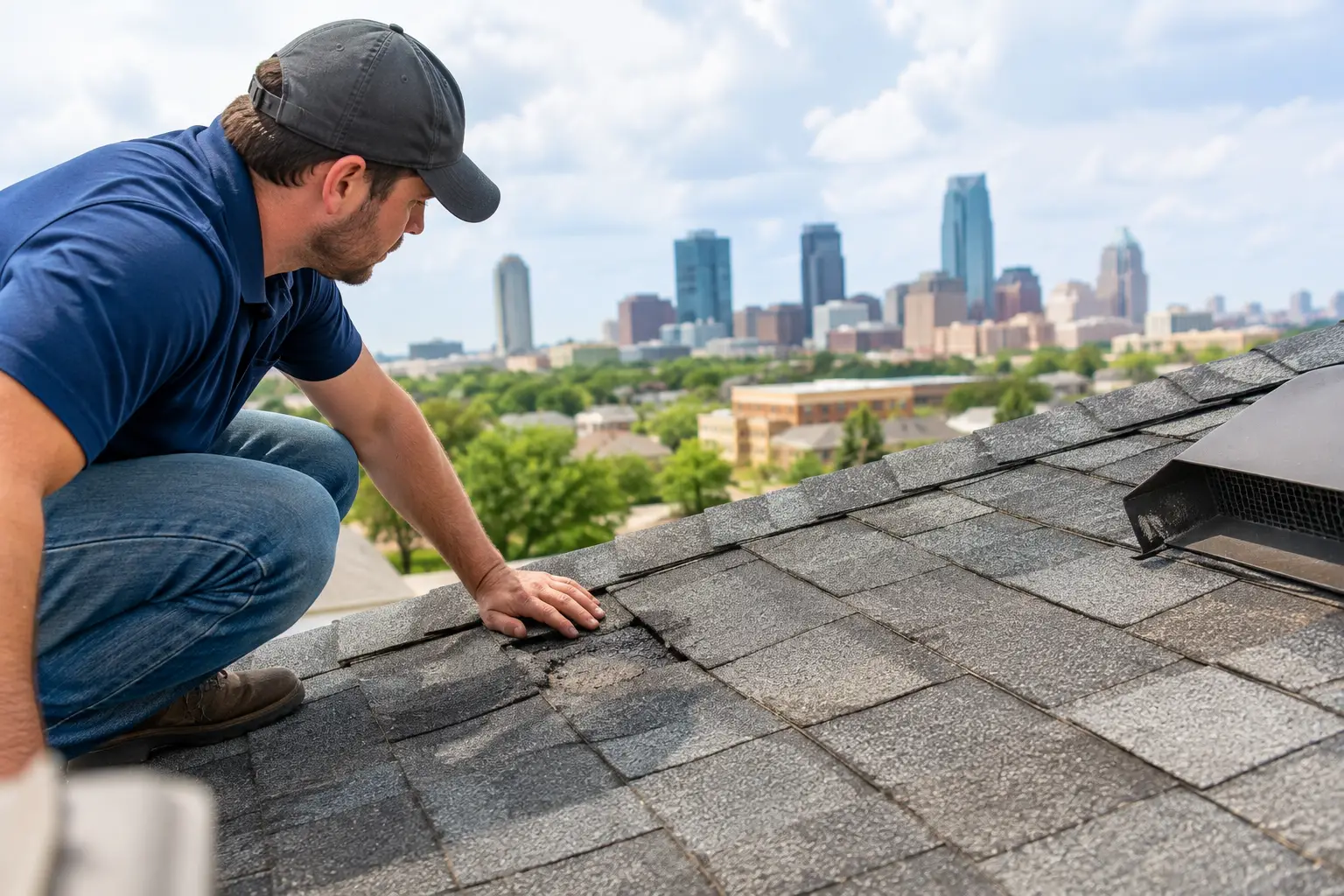
A roof leak or damaged detail in Fort Worth, TX is worth inspecting promptly; the visible stain or missing shingle is not always the point where water entered.
A brown ceiling ring after a hard North Texas rain can be frustrating, but the wet spot is rarely the place where water first entered. Fort Worth roof leak causes often involve wind-driven rain, damaged flashing, backed-up gutters, or small roof defects that have been quietly worsening for months. Finding the true entry point takes a careful exterior and attic inspection, not a quick patch over the stain.
Why Fort Worth Roof Leaks Can Be Hard to Trace
Fort Worth roofs take a beating from sun, heat, sudden downpours, hail, and strong wind. Those conditions can loosen materials gradually or create immediate damage that is difficult to see from the ground. Water then follows framing, decking, insulation, or electrical penetrations before it appears inside.
That is why a leak over a bedroom ceiling may originate near a vent, valley, chimney, or roof edge several feet away. The timing of the leak also offers a useful clue. A leak that appears only during wind-driven rain may point to flashing or a vulnerable roof transition, while water that shows up after several days of rain can suggest saturated debris, poor drainage, or an aging roofing system.
7 Common Fort Worth Roof Leak Causes
1. Storm-damaged or missing shingles
High winds can lift shingle edges, break their seal, or pull shingles loose entirely. Hail can bruise asphalt shingles and dislodge granules, reducing the shingle's ability to protect the roof over time. Damage is not always dramatic. A roof can look generally intact from the yard while having creased, cracked, or lifted shingles that allow water beneath the surface.
After a storm, look for loose material around the property, bare spots on the roof, and granules collecting near downspouts. Do not climb onto the roof to investigate. Walking on compromised shingles can cause more damage and can be unsafe, especially on a steep or wet roof.
2. Failed flashing around roof penetrations
Flashing is the metal material installed where the roof meets a chimney, wall, skylight, pipe, or vent. It directs water away from these vulnerable transitions. When flashing is bent, corroded, improperly installed, or separated from the roof, water can enter even when the surrounding shingles are in good condition.
Pipe boots deserve special attention. The rubber collar around a plumbing vent can crack from heat and sun exposure, leaving an opening around the pipe. Because the failure is small and sits high on the roof, it may produce an intermittent leak rather than a steady drip.
3. Clogged or undersized gutters
Gutters do more than keep rainwater off walkways. They move water away from the roof edge, fascia, siding, and foundation. When leaves, twigs, roof granules, or nesting material block a gutter or downspout, water can spill over the edge or back up beneath roofing materials.
Overflow alone does not always mean the roof is leaking, but it can create conditions that lead to damage around the eaves. If water pours over one section of gutter during a normal rain, the issue could be a blockage, poor gutter pitch, a crushed downspout, or gutters that are too small for the roof area. A gutter inspection should be part of any roof leak evaluation, particularly around mature trees.
4. Worn valleys and roof transitions
A valley is the channel where two roof slopes meet. It handles a large volume of runoff, so even a small installation or material issue can become a leak. Debris buildup in a valley can slow water movement, while damaged shingles or exposed fasteners can let water reach the underlayment and decking.
Transitions between different roof sections require the same level of attention. A low-slope section meeting a steep shingle roof, a wall connection, or a dormer can all create opportunities for water intrusion if materials are not correctly layered and sealed. These areas are often best assessed by a roofing professional because the repair depends on the specific roof design and existing materials.
5. Aging shingles and underlayment
Roofing materials do not fail all at once. Asphalt shingles may become brittle, curl at the edges, lose protective granules, or crack after years of exposure to Texas heat. Underlayment beneath the shingles can also deteriorate. Once the layers of a roof system are nearing the end of their service life, isolated repairs may stop one leak while another develops elsewhere.
This does not automatically mean roof replacement is the right answer. A localized problem on a roof with plenty of remaining life can often be repaired. If there are multiple leaks, widespread shingle wear, soft decking, or repeated repairs in different areas, replacement may be the more practical long-term choice. A thorough inspection helps distinguish between a repairable defect and a system-wide concern.
6. Poor attic ventilation and moisture problems
Not every ceiling stain comes from rainwater. Inadequate attic ventilation can trap heat and moisture, contributing to condensation, mold growth, damp insulation, and premature roof material wear. Bathroom fans that vent into the attic instead of outdoors can make the problem worse.
Condensation is more likely to show up during periods of temperature change and may not follow a storm. An inspection should look for wet insulation, moisture on roof decking, mildew, blocked vents, and disconnected exhaust ducts. Treating condensation as a roof leak can lead to an unnecessary patch, while ignoring it can damage the roof structure from the inside.
7. Roof-mounted equipment and previous repairs
Satellite dishes, solar equipment, HVAC-related penetrations, and old mounting brackets can create leak points if they are not flashed and sealed correctly. Previous repairs can also fail when sealant dries out, exposed nails are left unprotected, or replacement shingles are not integrated properly with the existing roof.
Sealant has a place in roofing work, but it should not be the only defense against water. A durable repair relies on correct material overlap, properly installed flashing, and secure fastening. If a leak keeps returning in the same location after being caulked, the underlying detail likely needs to be rebuilt rather than sealed again.
What to Do When You Notice a Leak
Start indoors. Move furniture, electronics, and valuables away from the affected area, and place a container under an active drip. If the ceiling is bulging with water, avoid standing beneath it and contact a professional promptly. Water can add significant weight to drywall and may cause it to collapse.
Take clear photos of ceiling stains, active drips, wet flooring, and any visible exterior damage from the ground. Note when the leak occurs and whether it happens during heavy rain, wind, or after a prolonged storm. This information can help a roofer identify the likely source and can support an insurance claim when storm damage is involved.
Avoid putting a tarp on the roof yourself unless you can do so safely from the ground. Do not pressure wash the roof, nail through shingles, or apply large amounts of roofing cement to an unknown leak source. Those temporary efforts can hide evidence, trap water, or create a more involved repair later.
When a Professional Inspection Is Worth It
A professional inspection is the right next step after hail or wind, when you see interior water staining, or when a roof leak returns after a previous repair. It is also wise before buying a home with an older roof or after noticing recurring gutter overflow. The goal is not simply to find a wet spot. It is to identify the condition of the shingles, flashing, decking, vents, valleys, gutters, and drainage path as a complete system.
For storm-related damage, inspection documentation can clarify whether there is a repair issue, broader roof damage, or a condition that may be appropriate to discuss with your insurer. Insurance coverage depends on your policy, the documented damage, and the adjuster's assessment, so no contractor should promise an outcome. A knowledgeable roofing team can, however, explain the findings clearly and help you understand the next steps.
A small stain is worth taking seriously, but it does not have to become a major disruption. Fort Worth homeowners who act early can often limit interior damage and make a confident repair decision. Reilly Roofing and Gutters can provide a no-cost, no-obligation roof inspection to help determine where the water is getting in and what a sound repair should involve.
Local roofing help
Need roof repair in Fort Worth, TX?
Reilly Roofing and Gutters can inspect the issue, explain the practical options, and connect you with the Fort Worth office.
Common questions
About Roof Repair
Can a roof in Fort Worth, TX be repaired instead of replaced?
Yes, when the problem is isolated and the rest of the roof remains in sound condition. A professional inspection can identify the source, explain the repair, and flag when broader wear changes the recommendation.
How quickly should a roof leak be checked?
As soon as possible. Water can travel along framing or under roof materials before it appears indoors, so delaying a leak inspection can increase the affected area.
What happens during a roof repair inspection?
The inspection should review the visible symptom and the surrounding roof components, including shingles or membrane, flashing, penetrations, valleys, ventilation, and drainage where relevant.