
Quick answer
A roof in Dallas–Fort Worth may need replacement when damage or aging is widespread, but a qualified inspection should separate a repairable issue from a system that has reached the end of its useful life.
A roof rarely fails all at once. More often, small changes in the shingles allow water, heat, and wind to wear down the system until a repair is no longer enough. Knowing the signs shingles need replacement can help you act before a minor concern becomes interior damage, mold, or a larger insurance claim.
In North Texas, that decision can arrive sooner than expected. Intense sun, hail, high winds, rapid temperature swings, and heavy rain all put pressure on an asphalt shingle roof. The good news is that the warning signs are often visible when you know where to look.
1. Your Shingles Are Curling, Cupping, or Buckling
Shingles should lie flat against the roof. When their edges turn upward, their centers rise, or sections appear wavy, the material may be losing flexibility and adhesion. This can happen as shingles age, after prolonged heat exposure, or when moisture has affected the roof deck or attic ventilation.
A few isolated curled shingles may be repairable if matching materials are available and the surrounding roof is in good condition. Widespread curling is different. It usually means the shingles have reached the end of their useful service life and are more likely to lift or break in the next windstorm.
2. Granules Are Collecting in Gutters or at Downspouts
The sandy coating on an asphalt shingle is not decorative. Granules protect the asphalt layer from ultraviolet rays, add fire resistance, and help the shingle withstand weather. Some granule loss is normal, particularly on a new roof or after a strong storm. What matters is the amount and pattern.
If you regularly find heavy granule buildup in gutters, below downspouts, or along the driveway, take a closer look at the roof. Bare, dark patches on shingles are a more serious concern because they show the protective surface is wearing away. At that point, the roof can deteriorate quickly under Texas sun.
3. Shingles Are Cracked, Torn, or Missing
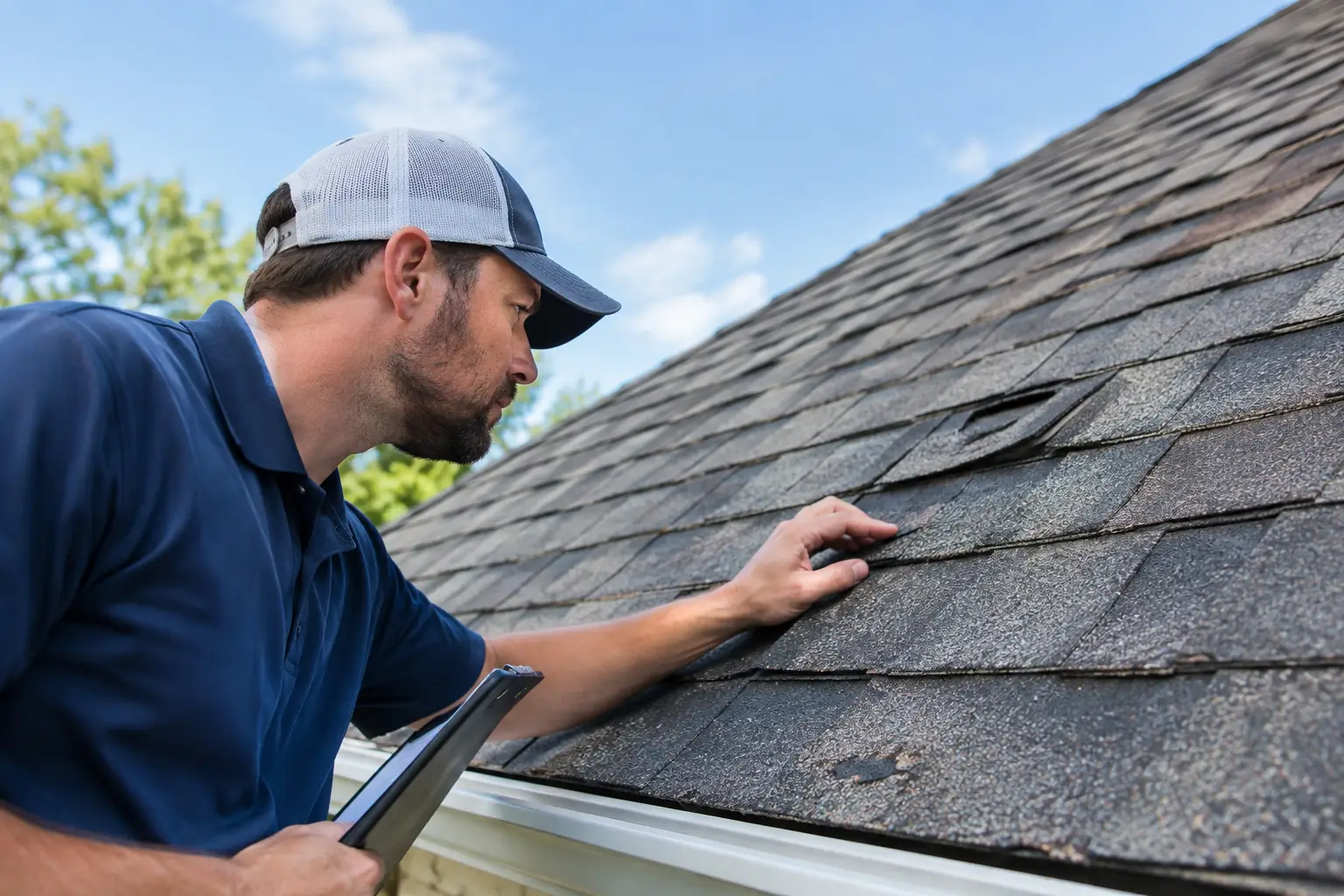
Cracks and missing tabs create direct paths for wind-driven rain. High winds can pull at loose shingle edges, while hail can bruise or fracture the mat beneath the surface. Damage may not always look dramatic from the ground, especially after a storm, but even a small torn area can expose nails and underlayment.
A limited number of damaged shingles does not automatically mean full replacement. A qualified inspection should determine whether the damage is isolated, whether repairs can blend with the existing roof, and whether the roof has enough remaining life to justify repair. If shingles are brittle throughout several slopes or damage is widespread, replacement is usually the sounder investment.
4. You See Dark Spots, Hail Marks, or Soft Areas
Hail damage can be difficult for a homeowner to identify safely. It may appear as random dark spots, circular areas with displaced granules, or bruising that feels soft when checked by a trained roofer. Those impacts can shorten the roof's lifespan even if there is no immediate leak.
After a significant hail or wind event, an inspection provides documentation of the roof's condition while evidence is still clear. This is especially helpful if you need to speak with an insurance adjuster. Do not assume a roof is fine just because it is not leaking inside yet. Storm damage often develops into a leak over time.
5. Roof Valleys Show Wear or Missing Shingles
Valleys handle a large volume of rainwater because they direct runoff from two roof planes into one channel. When shingles in a valley are cracked, thin, loose, or missing, water has fewer defenses before it reaches the underlayment and roof deck.
This area deserves prompt attention. A localized valley repair may work if the surrounding shingles remain healthy. If the valley wear is part of an older roof with granule loss and brittleness across multiple slopes, replacing the roofing system can prevent repeat repairs in the same vulnerable area.
6. You Find Water Stains, Leaks, or a Musty Attic
A brown ceiling stain, bubbling paint, damp insulation, or musty attic smell should never be ignored. The source may be a failed shingle, damaged flashing, a plumbing vent, a skylight, or another roof penetration. Water can travel along framing before it becomes visible indoors, so the stain is not always directly below the entry point.
One leak does not always require a new roof. Flashing repairs and isolated roof repairs can be effective when the rest of the system is sound. But recurring leaks, multiple stains, or wet roof decking may indicate more extensive failure. Delaying an inspection can turn a roofing problem into a repair involving drywall, insulation, framing, and flooring.
7. Daylight Is Visible From the Attic
On a bright day, carefully look up from inside the attic. Daylight around a vent pipe or at a roof penetration may point to a flashing problem. Daylight through the roof deck, gaps near the ridge, or visible openings around damaged shingles requires a professional assessment.
Avoid walking across attic insulation or stepping on the ceiling below. A roofing professional can inspect the roof surface, decking, ventilation, and flashing without creating a second problem.
8. The Roof Is Near or Beyond Its Expected Age
Age alone does not decide whether shingles need replacement. Installation quality, ventilation, weather exposure, maintenance, and storm history all matter. Still, an aging roof deserves closer attention, particularly if it is approaching the expected service range for its shingle type.
If you purchased a home recently and do not know the roof's history, an inspection can establish a baseline. This is also wise before listing a home, renewing property insurance, or starting another major exterior project. Replacing a roof on your schedule is usually less stressful than responding to a leak during a storm.
9. Your Neighbors Are Replacing Similar Roofs
Homes in the same neighborhood are often built around the same time with similar materials and receive the same weather exposure. A row of nearby roof replacements does not prove your roof has failed, but it is a useful signal to schedule an inspection.
Look for the physical condition of your own shingles rather than relying on comparisons alone. A shaded roof may age differently from a roof with full southern exposure, and a previous storm repair can affect the remaining system in ways that are not obvious from the street.
10. Repairs Keep Adding Up
A repair is the right choice when it addresses a specific problem and preserves a roof that still has substantial useful life. It becomes less practical when repairs are recurring, matching shingles are no longer available, leaks appear in new locations, or the roof has broad signs of aging.
At that stage, continued spot repairs can cost more over time without restoring dependable protection. A complete replacement also allows the contractor to inspect the deck, update underlayment and flashing, address ventilation concerns, and install a unified system backed by applicable manufacturer warranties.
When to Schedule a Roof Inspection
You do not need to climb onto the roof to make a replacement decision. In fact, walking on aged or storm-damaged shingles can cause additional damage and creates a real fall risk. A professional inspection is appropriate after hail or high winds, when you notice interior water signs, before buying or selling a property, and whenever the roof is showing more than one concern described above.
For North Texas property owners, the best time to inspect is before a small issue meets the next severe storm. Reilly Roofing and Gutters can assess the condition of the shingles, explain whether repair or replacement makes financial sense, and provide clear documentation if storm damage may support an insurance claim. A no-cost inspection gives you facts to work from, not pressure to make a rushed decision.
Your roof does not have to be actively leaking to need attention. Catching worn shingles early gives you more control over timing, budget, materials, and the protection of everything beneath them.
Local roofing help
Need roof replacement in Dallas–Fort Worth?
Reilly Roofing and Gutters can inspect the issue, explain the practical options, and connect you with the Reilly office that serves your area.
Common questions
About Roof Replacement
How do I know whether a roof in Dallas–Fort Worth needs replacement?
Widespread missing, brittle, curled, or damaged shingles, recurring leaks, and extensive storm damage can point to replacement. The right answer depends on the roof’s condition, age, repair history, and inspection findings.
Can an older roof still be repaired?
Sometimes. An isolated issue can be repaired when compatible materials are available and the surrounding roof still has useful life. A repair is less compelling when the material is failing across multiple roof slopes.
What should a replacement estimate explain?
Ask for the material system, underlayment, flashing, ventilation, accessories, cleanup plan, warranty options, and any conditions that could affect the final scope.